All posts

September 23, 2026

How to Ride the NYC Subway Like a Local

The New York City subway is the fastest, cheapest and most New York way to get around the city. It runs 24 hours a day, 7 days a week, with more than 470 stations spread across four boroughs, and on a typical weekday it carries millions of riders. It can also be baffling on your first ride: letters and numbers instead of line names, trains that skip stops, and stations where the uptown and downtown platforms have entirely separate entrances.

Our guides ride it every day, and these are the tips they share with visitors. Master them and you'll move around the city like you've lived here for years.
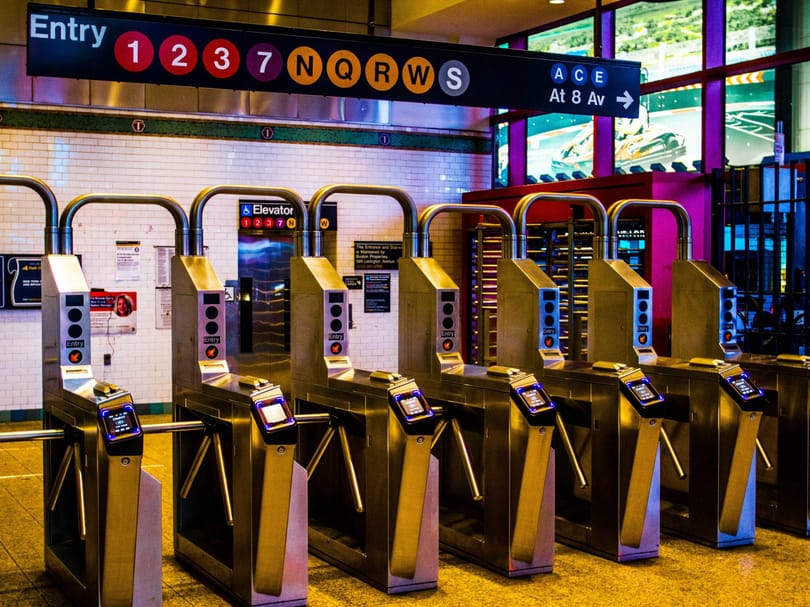
Subway Station entrance in New York City
A subway entrance in New York City

Paying your fare: just tap

Forget buying tickets. Every subway turnstile and city bus has an OMNY reader, and you simply tap a contactless credit or debit card, or a phone or smartwatch with a digital wallet, and walk through. MetroCards are no longer sold (sales ended at the end of 2025) and are being phased out, so for most visitors, the card already in your wallet is all you need. Check the MTA website for the current fare.

Fare capping: ride free after 12 trips

OMNY automatically caps what you pay. Once you've paid for 12 rides within any rolling seven-day period using the same card or device, the rest of your rides in that period are free. You don't need to sign up or buy a pass, but it only works if you always tap with the same card or device. Switching between your phone and your physical card counts as two different riders.

Transfers are also built in: tap the same card within two hours to change between subway and bus (or bus to bus) at no extra charge.

Traveling as a group? You can tap one card several times to let companions through, but only the first tap counts toward fare capping. If you're staying a week, give each person their own card or phone to tap so everyone gets the free rides.

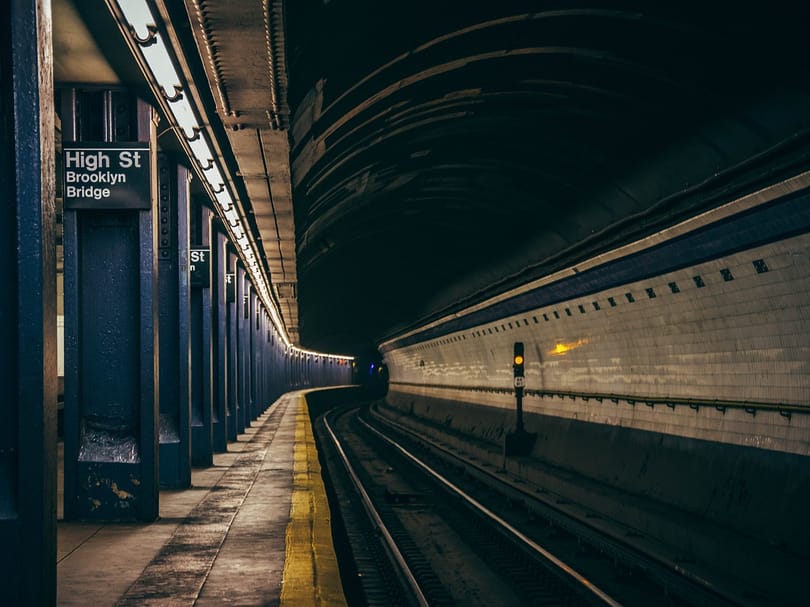
Subway station in New York City
A subway platform in New York City

Reading the map

Subway services are named by letter or number, and each is shown in a color that matches its trunk line through Manhattan. The 4, 5 and 6 are green and run under Lexington Avenue; the 1, 2 and 3 are red and run under Broadway and Seventh Avenue; the A, C and E are blue and run under Eighth Avenue.

On the official map, a white circle marks a station where express and local trains both stop, while a black dot is a local-only station. The MTA app and the station countdown clocks show live arrivals, so check them before you head down.

Express vs local

Many lines have four tracks: two for local trains that stop everywhere, and two in the middle for express trains that skip stops. On the Seventh Avenue line, for example, the 1 is local while the 2 and 3 are express. Riding an express for a long trip up or down Manhattan can save a lot of time, but if your stop is a black dot on the map, you'll need a local. When in doubt, ride the express to the nearest white-circle station, then cross the platform to a local.

Uptown, downtown and the entrance trap

In Manhattan, directions are simple: uptown means north, downtown means south. The catch is that at many stations, especially on the older lines, the uptown and downtown platforms have separate street entrances, often on opposite sides of the avenue, with no way to cross inside. Read the sign above the stairs before you tap: it will say something like "Uptown & The Bronx" or "Downtown & Brooklyn." Walk down the wrong one and you'll pay again to fix it.

Subway etiquette New Yorkers actually care about

  • Let people off before you get on
  • Move into the car instead of blocking the doors
  • Never hold the doors: another train is usually minutes behind
  • Take your backpack off in crowded cars
  • Don't lean on the pole; others need to hold it
  • Offer your seat to older riders, pregnant riders and anyone who needs it more
  • Stand to the right on escalators so others can walk
  • Keep music and calls to headphones
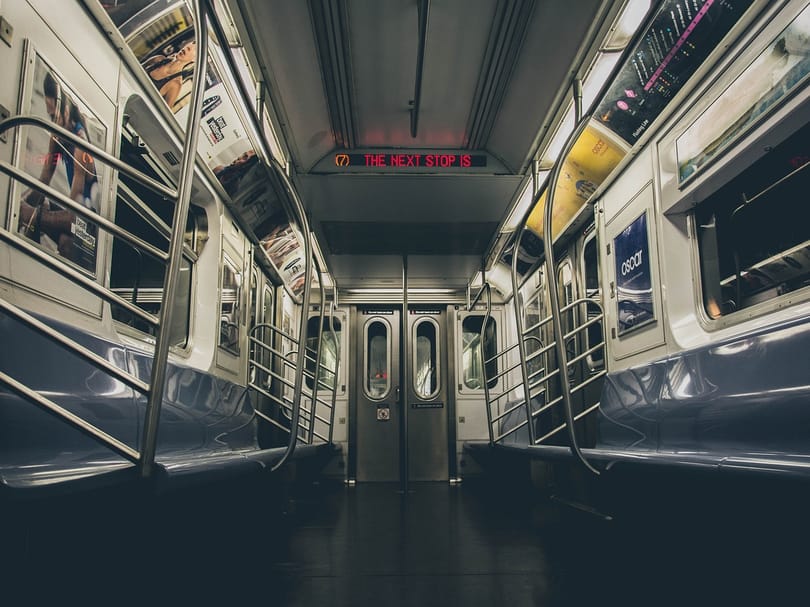
Empty Subway Carriage in New York City
An empty subway car

Safety and late nights

Millions of people ride the subway safely every day, and a little city sense goes a long way. Stand well back from the platform edge. Keep your phone and wallet secure, especially near the doors, where snatch-and-run thefts are most likely. If a car is strangely empty at a busy time, there's usually a reason (a broken air conditioner or a mess), so pick the next one.

Late at night, wait in the marked off-hours waiting area if there is one, and ride in the car where the conductor sits, usually near the middle of the train. Service patterns change late at night and on weekends because of maintenance, so check posted signs and the MTA app before you travel.

The best lines for sightseeing

  • The 7 train runs elevated through Queens, with skyline views and stops for the food neighborhoods of Jackson Heights and Flushing, plus Flushing Meadows–Corona Park.
  • The Q train crosses the Manhattan Bridge with a great view of the Brooklyn Bridge and lower Manhattan, then continues all the way to Coney Island.
  • The J and M trains rattle over the Williamsburg Bridge between the Lower East Side and Brooklyn.
  • The 1 train takes you to South Ferry for the free Staten Island Ferry, which sails past the Statue of Liberty for one of the best harbor views in the city. It doesn't stop at Liberty Island, so to visit the statue and Ellis Island, join our Statue of Liberty and Ellis Island Tour.
  • The 4 and B/D trains stop at 161st Street for Yankee Stadium.

Heading out of Manhattan? Our guide to Brooklyn, the Bronx and Queens has plenty of reasons to ride.

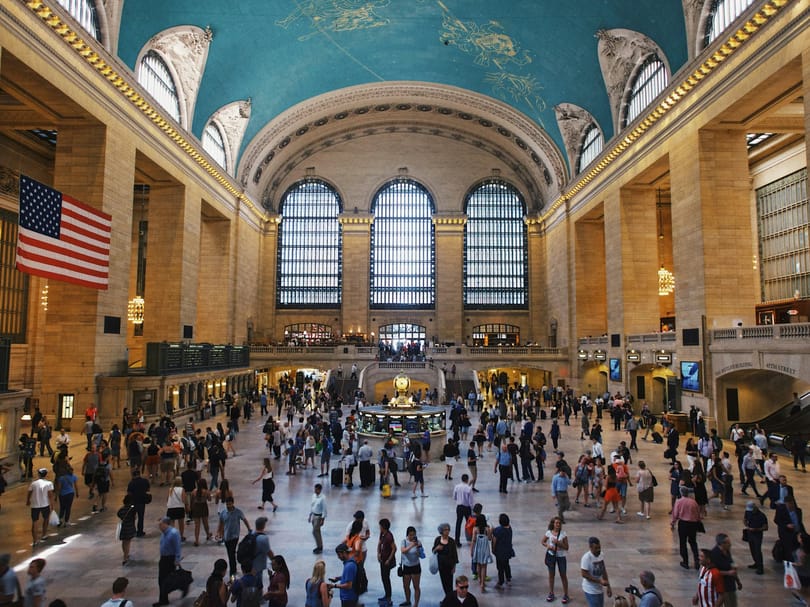
Busy Grand Central Station, New York
Grand Central, one of the busiest hubs in the system

Subway trivia: the City Hall ghost station

When the first subway line opened in 1904, its showpiece was City Hall station, with Guastavino tile vaults, skylights and brass chandeliers. It closed in 1945 because its tight curve couldn't fit the longer trains the system needed. The station still exists, and the downtown 6 train loops through it to turn around after its last stop at Brooklyn Bridge–City Hall. Riders are generally asked to leave the train at the last stop, so watch for announcements; the New York Transit Museum occasionally runs official tours for its members. The museum itself, in a decommissioned 1936 station in Brooklyn, is a must for fans of vintage subway cars.

Practice with a pro

The easiest way to learn the subway is to ride it with someone who knows it. Our NYC in a Day Walking Tour uses the subway to hop between neighborhoods, so you'll see the city's highlights and pick up the system along the way. For more trip planning, see our 3-day New York itinerary for first-timers.

New York Experience is run by ExperienceFirst, a New York tour company founded in 2009.

NYC subway FAQs

Tap a contactless credit or debit card, or a phone or smartwatch with a digital wallet, on the OMNY reader at the turnstile. Check the MTA website for the current fare.
After you've paid for 12 rides within any rolling seven-day period using the same card or device, the rest of your rides in that period are free. You must tap with the same card or device every time.
Yes, the subway runs 24 hours a day, but some routes change late at night and on weekends for maintenance. Check posted signs and the MTA app.
Local trains stop at every station on their line. Express trains skip some stops and only stop at stations shown as white circles on the map.
Millions of people ride it safely every day. Stand back from the platform edge, keep valuables secure and use the conductor's car late at night.