All posts

September 23, 2026

Eating Through Chinatown, Little Italy and SoHo: A Block-by-Block Guide

Few corners of New York pack as much into as little space as the patch of Lower Manhattan where SoHo, Little Italy and Chinatown meet. You can walk from a 19th-century cast-iron shopping street to a cannoli counter to a dim sum parlor in about twenty minutes, and each block tells a different chapter of the city's immigrant story.

This guide walks you north to south, the way we like to do it: start with SoHo's architecture while you're still fresh, graze your way down Mulberry Street, and finish in Chinatown when you're properly hungry. Along the way you'll learn why the buildings look the way they do, why Little Italy is smaller than it used to be, and how a crooked little street earned the nickname the Bloody Angle.
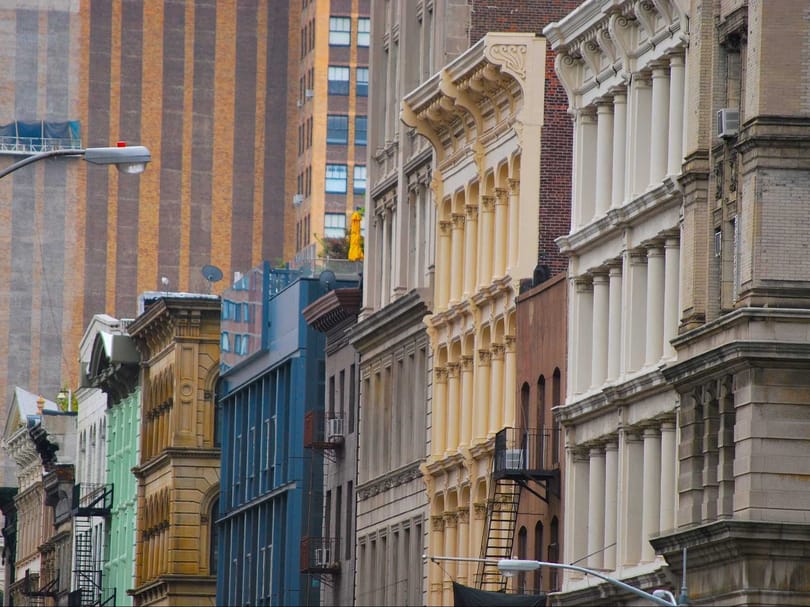
buildings in SoHo New York City with cast-iron architecture
Cast-iron facades in SoHo

SoHo: start with the buildings

SoHo simply means "South of Houston" (and, New Yorkers will remind you, it's pronounced HOW-ston). In the mid-1800s this was the city's dry-goods and manufacturing district, and merchants wanted grand facades without the cost of carved stone. The answer was cast iron: facade pieces cast from molds, bolted onto the building and painted to look like marble or limestone. It was cheap, fast, and allowed huge windows that flooded the upper-floor workshops with daylight.

The result is the largest collection of cast-iron architecture in the world. The area was protected as the SoHo–Cast Iron Historic District in 1973, not long after artists had begun moving into the empty lofts and turning the neighborhood into the center of the downtown art scene.

What to look for

  • The Haughwout Building at Broadway and Broome Street (1857), home to the first commercial passenger elevator, built by Elisha Otis's company.
  • Greene Street, the best block-by-block showcase of cast iron. Look for the so-called "King" and "Queen" of Greene Street, two of the most elaborate facades on the strip.
  • Vault lights: the small glass disks set into the sidewalks, which once let daylight into basement storerooms below.

Local tip: bring a fridge magnet. Touch it to a column and, if it sticks, you're looking at iron dressed up as stone. For a SoHo snack, Dominique Ansel Bakery on Spring Street is where the croissant-doughnut hybrid launched a global craze in 2013. Lines vary a lot, so check current hours and go early.

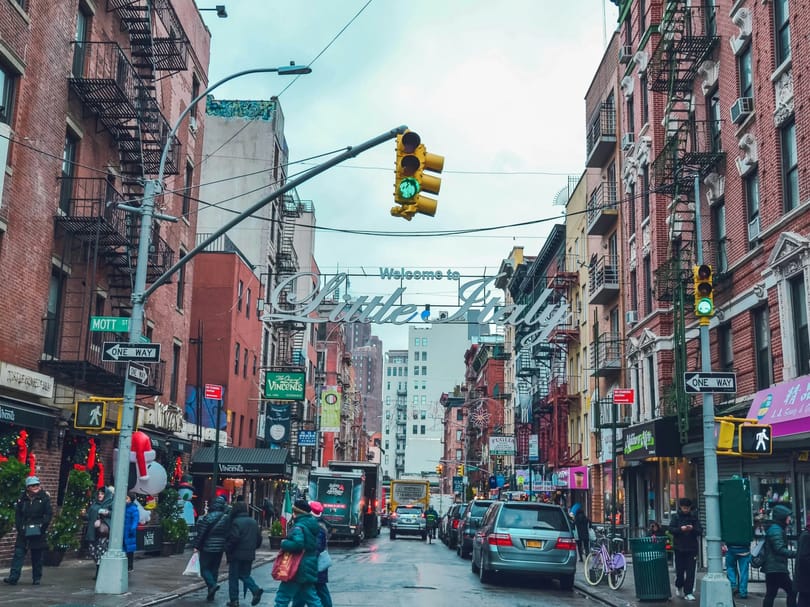
People walking by Little Italy in NYC
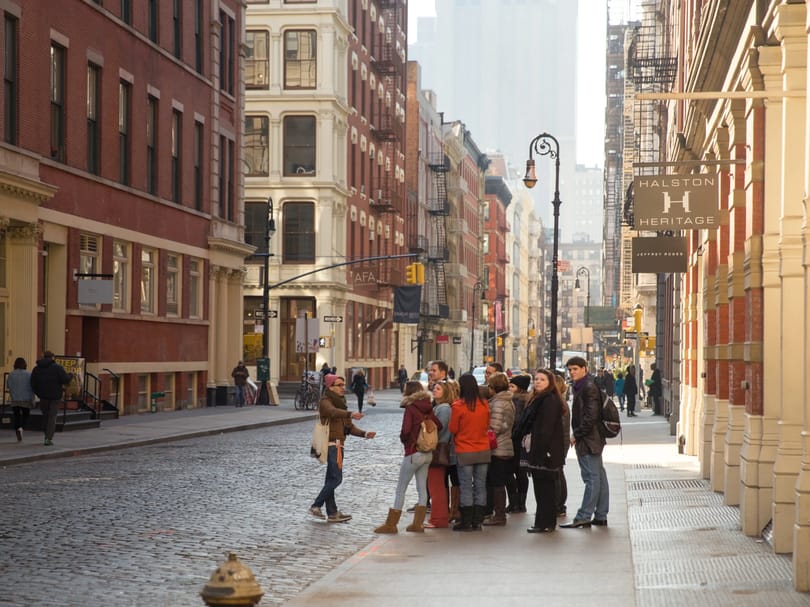
Mulberry Street, the heart of Little Italy

Little Italy: Mulberry Street and the art of the cannoli

Walk east across Lafayette Street and you'll reach Mulberry Street, the spine of Little Italy. At the turn of the 20th century, this was one of the densest immigrant neighborhoods on earth, home to tens of thousands of Italians, many from Naples, Sicily and Calabria, packed into tenements that stretched over dozens of blocks.

Today Little Italy is only a few blocks long. As families prospered they moved to Brooklyn, Staten Island and the suburbs, while Chinatown grew north. What remains is part living neighborhood, part open-air dining room, with red-sauce restaurants spilling onto the sidewalk.

The Feast of San Gennaro

Every September, Mulberry Street hosts the Feast of San Gennaro, an eleven-day street festival honoring the patron saint of Naples that has run since 1926. The statue of the saint is carried through the streets in procession, and the blocks fill with sausage-and-pepper stands, zeppole fryers and games of chance. If your trip lines up with it, go on a weekday afternoon to avoid the heaviest crowds.

Cannoli culture

Just off Mulberry on Grand Street, Ferrara Bakery has been serving Italian pastries since 1892, which makes it one of the oldest bakeries of its kind in the country. Wherever you buy your cannoli, the rule of thumb is the same: the best ones are filled to order. A shell that's been sitting with ricotta inside goes soft within the hour, so if you see a counter piping them fresh, that's your sign.

A block east, Di Palo's on Grand Street has been selling Italian cheeses and cured meats since 1925. It's the place to taste fresh mozzarella and see what an old-school Italian latteria looked like.

Don't miss

Walk north along Mulberry to Prince Street to see Old St. Patrick's Cathedral, dedicated in 1815. It was the seat of New York's Catholic archdiocese before the much larger St. Patrick's on Fifth Avenue opened, and its walled graveyard is one of the most atmospheric spots downtown.

Group of people walking down Chinatown in New York
The busy streets of Chinatown

Chinatown: Mott, Pell and Doyers

Cross Canal Street and the signs switch to Chinese characters, the fish markets spill onto the sidewalk and the air smells of roast duck and dried mushrooms. Chinese immigrants began settling around Mott, Pell and Doyers Streets in the 1870s. For decades the neighborhood was held small by the Chinese Exclusion Act of 1882, which barred most new arrivals. After immigration law changed in 1965, Chinatown grew rapidly and today it spreads well beyond its original few blocks.

Doyers Street and the Bloody Angle

Doyers Street is only about 200 feet long, and it bends sharply in the middle. That blind corner gave rival gangs, known as tongs, the perfect spot for ambushes during the turf wars of the early 1900s, and newspapers dubbed it the Bloody Angle. Today it is one of the prettiest little streets in Manhattan, lined with barber shops, cocktail bars and restaurants.

It's also home to Nom Wah Tea Parlor, which has been serving dim sum on Doyers since 1920, making it one of the oldest restaurants in Chinatown. Order a round of shrimp dumplings, pork buns and a scallion pancake and settle in.

How to eat dim sum like a regular

  • Go early: dim sum is a breakfast and lunch tradition, and weekend mornings are busiest
  • Order in waves: start with three or four dishes, then add more
  • Share: most plates hold three or four pieces
  • Tap two fingers on the table to say thank you when someone refills your tea
  • Leave the teapot lid ajar if you need more hot water
  • Carry some cash for smaller bakeries and dumpling counters

Finish in Columbus Park

End your walk in Columbus Park, where retirees play Chinese chess and cards under the trees. It sits on the site of Mulberry Bend, once the most notorious slum in the city, which was cleared in the 1890s after reformers like photographer Jacob Riis exposed its conditions. It's a fitting place to reflect on how far this neighborhood has come.

Your downtown food walk at a glance

  • Start at Broadway and Broome Street to see the Haughwout Building
  • Walk Greene Street for the best cast-iron facades
  • Head east to Mulberry Street and grab a filled-to-order cannoli
  • Detour to Old St. Patrick's Cathedral on Prince Street
  • Cross Canal Street into Chinatown via Mott Street
  • Turn onto Pell Street, then Doyers Street's famous bend
  • Eat dim sum, then rest in Columbus Park
Tour group during the Soho Little Italy and Chinatown walking tour in NYC

See it with a local guide

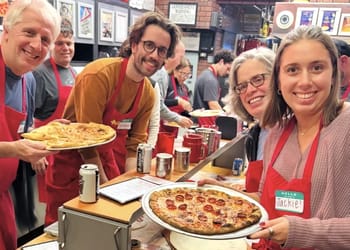
You can absolutely do this walk on your own, but the stories are what make it memorable. On our SoHo, Little Italy and Chinatown Walking Tour, a licensed New York guide connects the dots between the cast-iron lofts, the tenements of Mulberry Street and the back alleys of Chinatown, with plenty of tips on where to eat afterward. Want to get your hands floury? Try our Pizza-Making Workshop and Dinner.

New York Experience is run by ExperienceFirst, a New York tour company founded in 2009.

Downtown food walk FAQs

Without stops, about 20 to 25 minutes. Allow three to four hours if you want to look at the architecture, snack in Little Italy and sit down for dim sum.
It runs for eleven days every September on Mulberry Street. Exact dates change each year, so check the official festival listings before you travel.
Only a few blocks of Mulberry Street remain, and few Italian families still live there, but historic bakeries, cheese shops and restaurants keep the traditions going.
It's the sharp bend in Doyers Street in Chinatown. In the early 1900s rival tongs used the blind corner for ambushes, which earned it the nickname.
Morning to early afternoon. Dim sum is traditionally a breakfast and lunch meal, and weekend mornings are the busiest time.