All posts

September 23, 2026

A Field Guide to New York Pizza Styles

Ask ten New Yorkers where to find the best pizza and you'll get twelve answers and at least one argument. That's because "New York pizza" isn't one thing. It's a family of styles that grew up over more than a century, from coal-fired pies in Little Italy to thick square slices in Brooklyn and thin grandma pies from Long Island.

This field guide will help you tell them apart, order like a local and understand the history behind the counter. Pizzerias change hands and hours, so check current details before you make a pilgrimage.
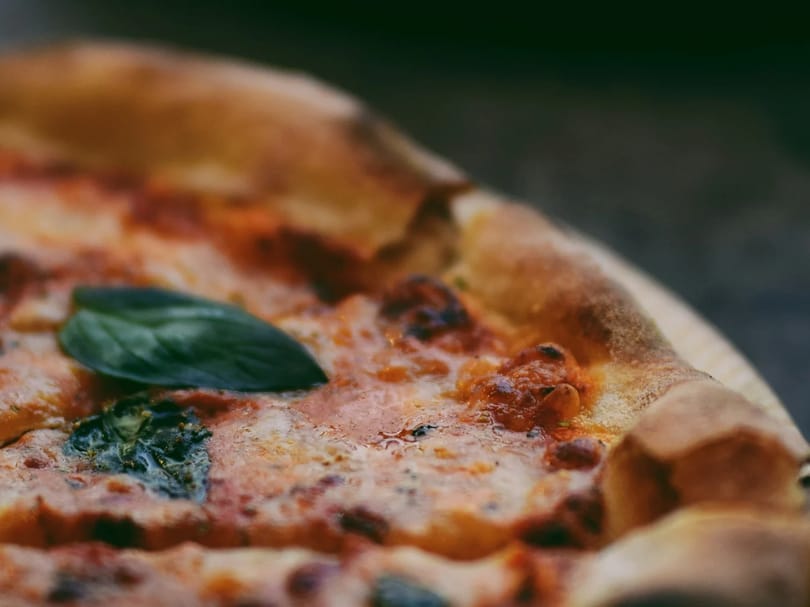
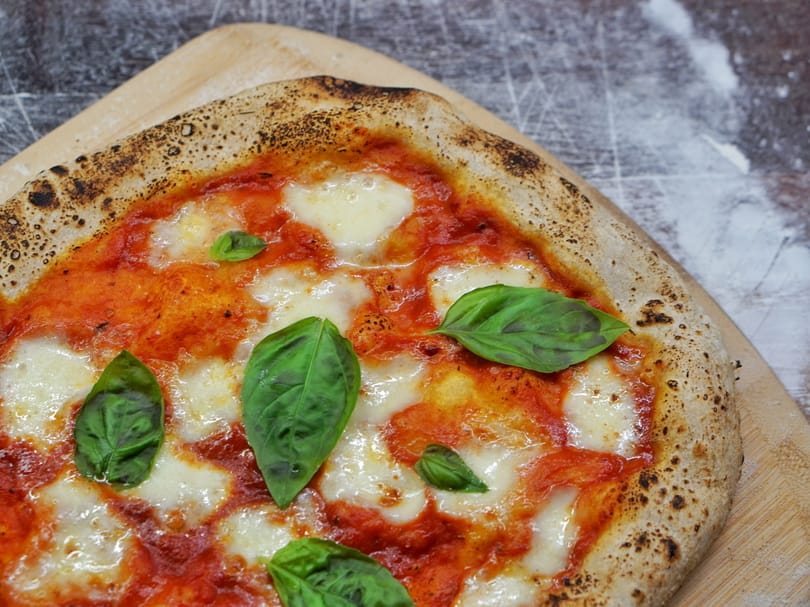
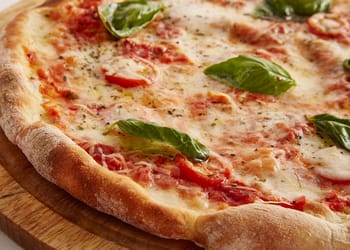
Close up of pizzas on table
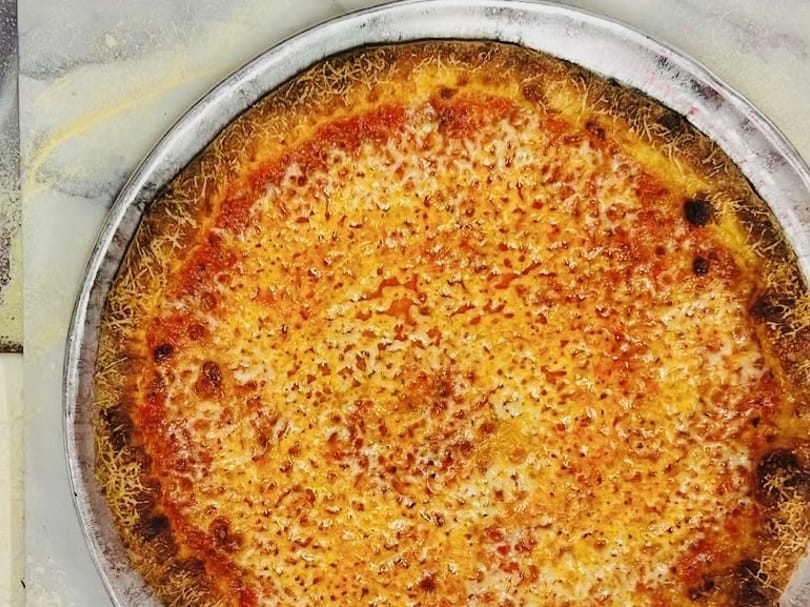
Whole pies ready to share
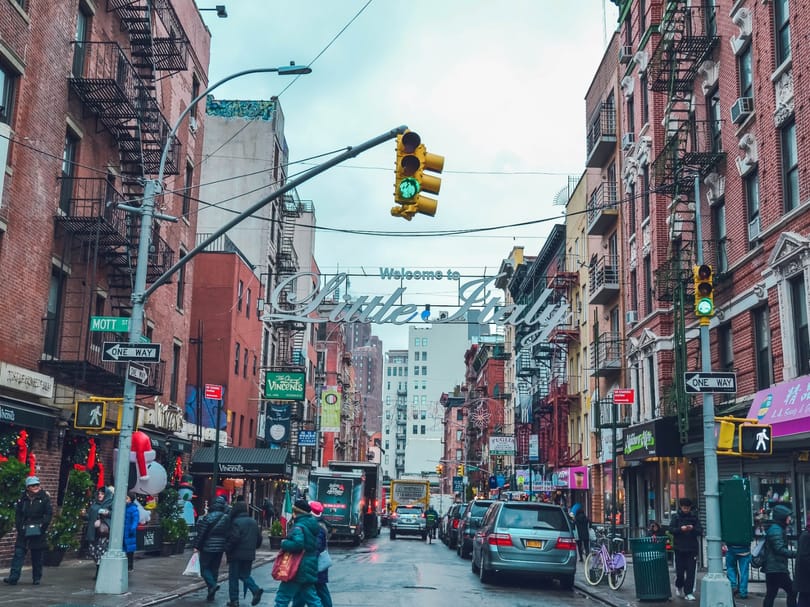
Little Italy in lower Manhattan
Little Italy, where the city's pizza story began

Where it all began: the first pizzerias

Pizza arrived with immigrants from Naples, who settled in large numbers around Mulberry Street in the late 1800s. At first it was sold in bakeries and grocery stores, often by the piece, to homesick workers.

Lombardi's on Spring Street is widely celebrated as the first licensed pizzeria in the United States, with a 1905 date on its sign. Food historians have since questioned the details, and argued that others were selling pizza in the neighborhood around the same time, but Lombardi's remains the symbolic birthplace. Its bakers went on to spread the craft across the city.

That family tree includes Totonno's in Coney Island, opened in 1924 by a Lombardi's alumnus, John's of Bleecker Street in Greenwich Village (which dates itself to 1929) and Patsy's in East Harlem (1933), which is often credited with helping to popularize selling pizza by the slice.

The classic New York slice

This is the one you picture: a wide triangle cut from a pie about 18 inches across, with a thin, crisp-bottomed crust that bends without cracking. The sauce is simple and bright, the cheese is low-moisture mozzarella, and the whole thing is baked in a gas-fired deck oven.

The slice shop is a true New York institution. You order at the counter, the slice goes back into the oven for a quick reheat, and you add your own garlic powder, dried oregano, red pepper flakes or grated Parmesan at the condiment station.

How to eat it

  • Fold it. Crease the slice lengthwise so the tip stays up and the oil stays on the plate.
  • Skip the fork. Locals will notice.
  • Try a plain first. A plain cheese slice is the benchmark for judging any slice shop.

Is it really the water? Many New Yorkers swear that the city's soft tap water, piped in from reservoirs upstate, is the secret to the dough. Food scientists are skeptical, pointing to flour, fermentation time and very hot ovens as the bigger factors. It's a great argument to have over a slice either way.

Coal-oven pies: the old guard

The earliest New York pizzerias baked in coal-fired brick ovens, which burn extremely hot and give the crust a smoky, charred, slightly blistered edge. Coal-oven pizzerias usually sell whole pies only, not slices, and the pizza is often topped with fresh mozzarella in patches rather than a blanket of shredded cheese.

Today's environmental rules make it very difficult to build new coal ovens in the city, so the ones that survive are mostly grandfathered in. That makes a meal at one of the historic coal-oven pizzerias, including Lombardi's, John's of Bleecker Street, Totonno's and Patsy's, a small taste of living history. Under the Brooklyn Bridge, Juliana's and Grimaldi's keep the tradition going too.

Pizza al taglio Roman street food
Pizza al taglio, Rome's rectangular slab pizza and a cousin of New York's square pies

The Sicilian: thick, square and airy

New York's Sicilian slice is baked in a rectangular pan and cut into squares. The crust is thick and spongy, with a fried, crunchy bottom from the oiled pan. It descends from sfincione, the bready street pizza of Palermo, though the New York version is usually cheesier.

The most famous Sicilian in the city is at L&B Spumoni Gardens in Gravesend, Brooklyn, in business since 1939. Its square is built "upside down," with the cheese laid on the dough and a sweet tomato sauce spooned on top. Finish with a cup of spumoni, naturally.

The grandma: thin, square and garlicky

The grandma pie is the Sicilian's thinner cousin. It's pressed into an oiled sheet pan without a long rise, topped with mozzarella and then dotted with crushed tomatoes and garlic, and baked until the edges are crisp. It's usually traced to home kitchens on Long Island and became a pizzeria staple in the 1990s. If you see it on a menu, order it: it's the style locals often love most.

More styles worth knowing

  • Neapolitan: small, soft, wood-fired pies in the style of Naples, with a puffy, leopard-spotted crust. Best eaten with a knife and fork, the one exception to the no-fork rule.
  • The upside-down or "square" slice: the L&B approach, now copied across the city.
  • Bar pie: a small, very thin, cracker-crisp pie sized for one, a specialty of Staten Island taverns.
  • The Detroit-style newcomer: rectangular with caramelized cheese edges, increasingly common in newer pizzerias.
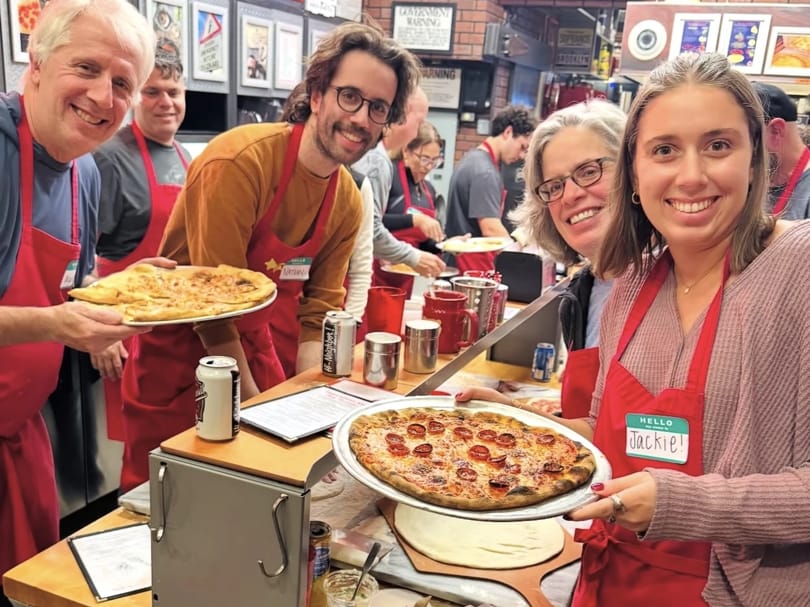
A pie fresh from the oven at our Pizza-Making Workshop

Your New York pizza passport

  • A plain cheese slice from a neighborhood counter, folded
  • A whole coal-oven pie at one of the historic pizzerias
  • A Sicilian square in Brooklyn
  • A grandma slice with plenty of garlic
  • A wood-fired Neapolitan pie, knife and fork allowed
  • Pizza under the Brooklyn Bridge in DUMBO
  • Your own pie, made by hand

Make your own New York pie

Reading about pizza is fun. Making it is better. At our Pizza-Making Workshop and Dinner, you'll stretch the dough, build your pie and sit down to eat it. Want the history too? Our SoHo, Little Italy and Chinatown Walking Tour passes through the neighborhood where the city's pizza story began, and our Guided DUMBO Foodie Experience tastes its way around the streets under the Brooklyn Bridge.

New York Experience is run by ExperienceFirst, a New York tour company founded in 2009.

New York pizza FAQs

Lombardi's on Spring Street is widely known as America's first licensed pizzeria, dating to 1905, though some historians argue others were selling pizza nearby around the same time.
Both are square and baked in pans. Sicilian is thick and airy with a long-risen dough, while grandma pizza is thinner and denser, topped with mozzarella and dots of crushed tomato and garlic.
Folding a large, thin slice lengthwise keeps the tip from drooping and makes it easy to eat on the go, which is how most New Yorkers eat a slice.
Usually not. Most of the historic coal-oven pizzerias sell whole pies only, so come with friends or an appetite.
It's a popular theory. The city's water is soft, but most experts say flour, fermentation and oven heat matter much more.