All posts

September 23, 2026

Eating Around the World in Queens: Flushing, Jackson Heights and Astoria

Queens is where New Yorkers go when they want to eat something they can't find anywhere else. Nearly half of the borough's residents were born outside the United States, and Queens is often described as one of the most linguistically diverse places on the planet. The result is a food scene that feels like a trip around the world, block by block, and often at prices that would make a Manhattan restaurant blush.

The good news for visitors is that three of the best food neighborhoods, Flushing, Jackson Heights and Astoria, are easy to reach by subway. Here's how to explore each one. Small restaurants and stalls here come and go, so we focus on what to look for rather than a fixed list, and it's always worth checking hours before you set out.
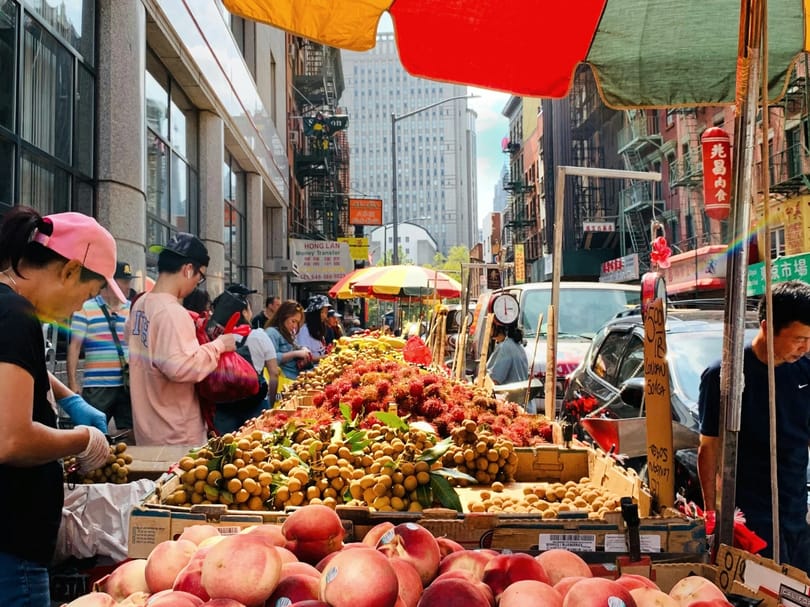
Fruit stalls piled with lychees, rambutans and peaches on a busy Chinatown street

Ride the International Express: the 7 train, which runs above ground through much of Queens, has been nicknamed the International Express because it connects so many immigrant neighborhoods. Ride it from Times Square or Grand Central and you can stop in Jackson Heights and Flushing on the same trip. Grab a window seat for views back toward the Manhattan skyline once the train climbs out of the tunnel in Long Island City.

Flushing: dumplings, noodles and more

At the end of the 7 line, Flushing is home to one of the largest and most varied Chinese communities outside Asia. Where Manhattan's Chinatown grew from Cantonese roots, Flushing represents regions from all over China, along with large Taiwanese and Korean communities. Main Street and the blocks around it feel like a city in their own right.

What to eat in Flushing

  • Hand-pulled and knife-cut noodles, often from northwestern China, in spicy, cumin-scented broths
  • Soup dumplings and pan-fried pork buns
  • Sichuan cooking, with its numbing peppercorns and chili oil
  • Peking duck and Cantonese roast meats from counters with ducks hanging in the window
  • Bubble tea and bakeries selling egg tarts, pineapple buns and mooncakes
  • Korean barbecue along Northern Boulevard, just east of downtown Flushing

Some of the best finds are in basement food courts beneath shopping malls, where dozens of tiny stalls serve regional specialties. Bring cash just in case, be ready to point at pictures, and share everything.

A little history

Flushing has a long record of welcoming newcomers. In 1657, residents signed the Flushing Remonstrance, a protest against a ban on Quaker worship that's often cited as a forerunner of the religious freedom in the Bill of Rights. The Quaker Meeting House on Northern Boulevard, built in 1694, is still standing.

Flushing Meadow Corona Park NYC
Flushing Meadows Corona Park, home of two World's Fairs

Walk it off in Flushing Meadows

One stop west of downtown Flushing on the 7 train, Flushing Meadows Corona Park hosted the World's Fairs of 1939 and 1964. The giant steel Unisphere from the 1964 fair still stands at its center, and nearby the Queens Museum is home to the Panorama of the City of New York, an enormous scale model of all five boroughs originally built for the fair. The park is also home to the tennis center where the US Open is played each summer, and Citi Field, home of the Mets.

Authentic food in Chinatown
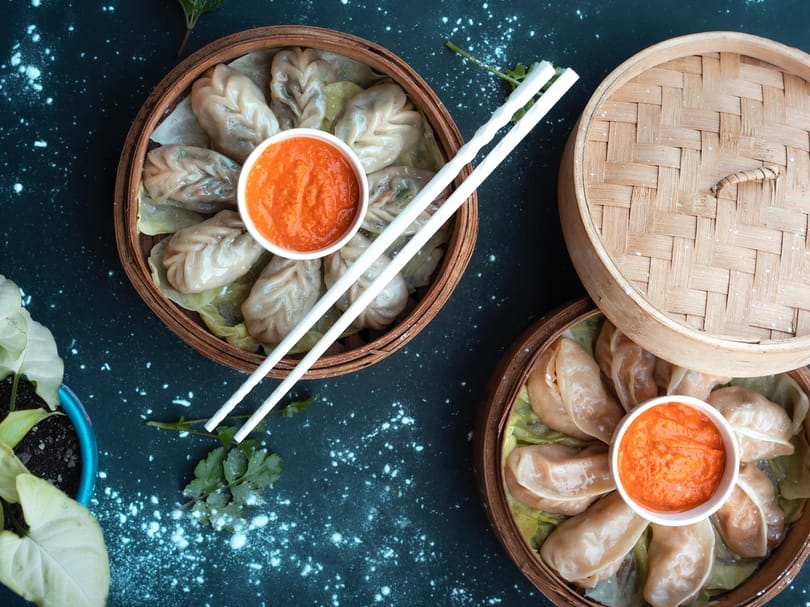
Momos, the Himalayan dumplings that are a Jackson Heights specialty

Jackson Heights: the world on one street

Get off the 7 train at 74th Street, where several subway lines meet, and you're in one of the most diverse neighborhoods in America. Within a few blocks you'll find South Asian sari shops and sweet counters, Himalayan dumpling houses, Colombian bakeries and Mexican taquerias.

What to eat in Jackson Heights

  • South Asian food on 74th Street, the heart of the neighborhood's Little India, with Indian, Pakistani and Bangladeshi restaurants and sweet shops
  • Momos, Tibetan and Nepali dumplings, served steamed or fried with spicy tomato chutney. Jackson Heights has one of the biggest Himalayan communities in the country
  • Colombian and Ecuadorian bakeries and cafés along Roosevelt Avenue, for arepas, pandebono, empanadas and strong coffee
  • Street food under the elevated tracks, from tacos and tamales to fruit cups dusted with chili

Jackson Heights is also a surprise for architecture lovers. In the 1910s and 1920s, developers built it as a planned "garden city," with elegant apartment buildings wrapped around private interior gardens. Much of the neighborhood is now a historic district, and a stroll along the side streets north of 37th Avenue shows off the best of it.

On the way to Flushing, consider hopping off the 7 at 103rd Street–Corona Plaza. About a 15-minute walk from the station, the Lemon Ice King of Corona has been scooping Italian ices since 1944, and the Louis Armstrong House Museum preserves the modest home where the jazz legend lived for nearly thirty years.

Table of food
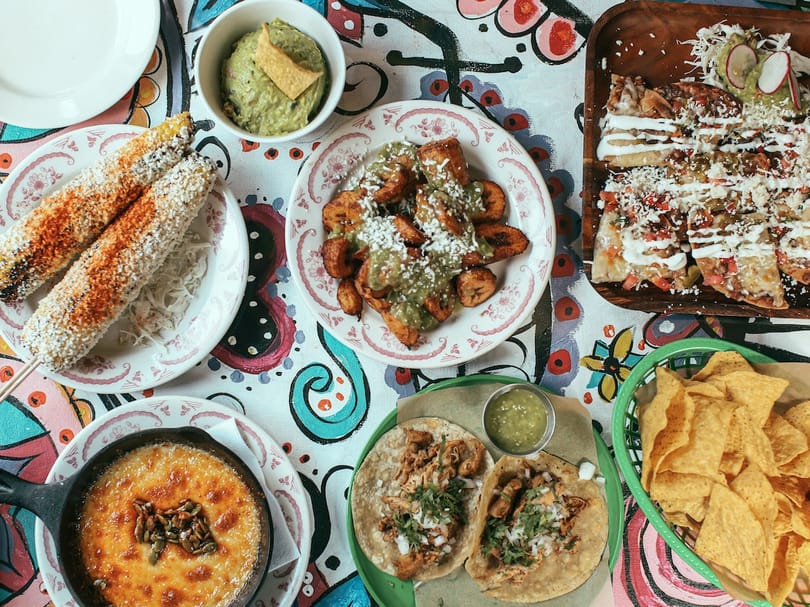
Tacos, elote and chips: Queens is one of the best places in the city for Latin American food

Astoria: Greek tavernas and a century-old beer garden

Across the East River from the Upper East Side, Astoria is best known as the heart of Greek New York. Greek families settled here in large numbers from the 1960s onward, and the neighborhood is still the place to go for grilled octopus, whole fish, lamb chops, spanakopita and honey-soaked pastries. Ditmars Boulevard, near the last stop on the N and W trains, is lined with tavernas and bakeries, and 30th Avenue is packed with cafés.

Astoria is much more than Greek, though. Steinway Street has a lively stretch of Egyptian and Middle Eastern cafés, bakeries and hookah lounges, and the neighborhood also has strong Brazilian, Balkan and Latin American communities.

Don't miss in Astoria

  • Bohemian Hall & Beer Garden, run by a Czech and Slovak community association since 1910 and often called the oldest beer garden in the city. On a summer evening, the huge tree-shaded garden is one of the happiest places in New York.
  • Astoria Park, on the waterfront, with views of the Hell Gate Bridge and a huge 1930s public pool.
  • The Museum of the Moving Image, next to the historic Kaufman Astoria Studios, where films were being made as early as the 1920s.

Tips for a Queens food crawl

  • Go hungry and in a group, so you can order more and share
  • Pick one neighborhood per meal; they're spread out
  • Ride the 7 train for Jackson Heights and Flushing on the same day
  • Carry some cash for small stalls and bakeries
  • Don't judge a place by its decor; many of the best spots are tiny
  • Point, smile and ask what's popular if you can't read the menu
  • Save room for dessert: Greek pastries, Colombian breads or Italian ices

Discover Queens with a guide

Queens is huge, and it helps to have someone who knows where to look. Our Brooklyn, Bronx and Queens bus tour takes you through some of the borough's most fascinating neighborhoods, including Flushing Meadows Corona Park, with plenty of stories along the way. For a more personal day, book the private luxury car version, and ask your guide for their favorite places to eat.

New York Experience is run by ExperienceFirst, a New York tour company founded in 2009.

Queens food FAQs

Take the 7 train to its last stop, Flushing-Main Street. From Grand Central it usually takes around 40 minutes. The Long Island Rail Road also runs to Flushing and can be faster.
Its extraordinary diversity. It's known for South Asian restaurants and shops on 74th Street, Himalayan momos, and Colombian, Ecuadorian and Mexican food along Roosevelt Avenue.
Greek food and culture, especially along Ditmars Boulevard and 30th Avenue, as well as Middle Eastern cafés on Steinway Street and the historic Bohemian Hall & Beer Garden.
It's possible but ambitious. Jackson Heights and Flushing pair easily on the 7 train. Astoria is on a different line, so it's best saved for another meal or day.
The neighborhoods in this guide are busy, family-oriented areas that welcome visitors every day. Use the same common sense you would anywhere in a big city.