All posts

September 23, 2026

The Met in a Morning: How to See the Highlights Without Burning Out

The Metropolitan Museum of Art is one of the largest art museums in the world. Its main building on Fifth Avenue covers more than two million square feet, and its collection spans some 5,000 years of human creativity. You could spend a week inside and still miss whole departments, which is exactly why so many visitors wander for an hour, get lost somewhere between the Assyrian reliefs and the period rooms, and leave exhausted.

The trick is to treat the Met like a city: pick a route, stick to the main avenues and save the side streets for another visit. Here's the three-hour highlights plan our guides swear by.
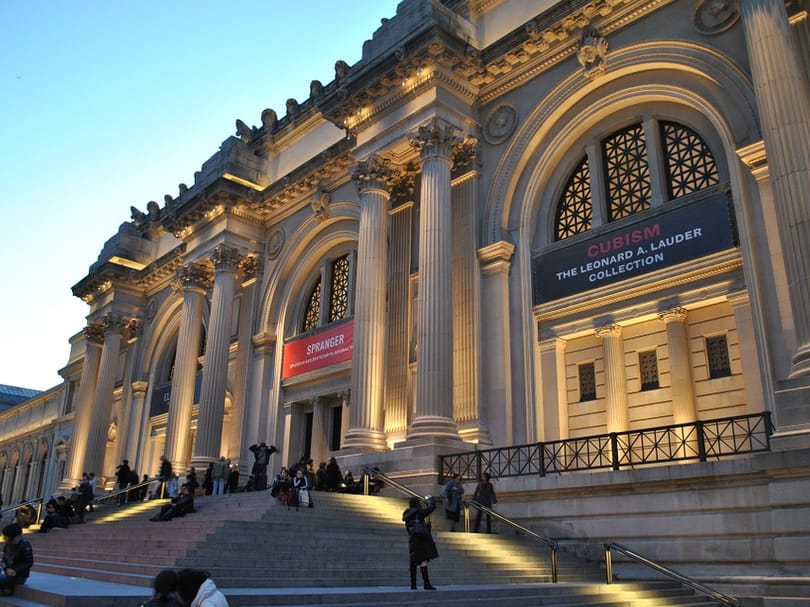
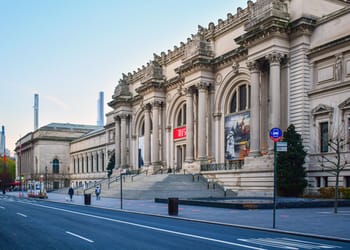
The Metropolitan Museum of Art in New York City
The Metropolitan Museum of Art on Fifth Avenue

Before you go: tickets and timing

Admission works differently depending on where you live. Since 2018, the famous pay-what-you-wish policy applies only to New York State residents and to students from New York, New Jersey and Connecticut, who need to show proof such as an ID or student card. Everyone else pays a fixed general admission price, and children under 12 go free with an adult. Check the Met's website for current prices and hours, since the museum is not open every day of the week.

Arrive at opening time. The first hour is the calmest of the day, and the galleries you most want to see, especially the Temple of Dendur, are at their quietest before the tour groups arrive.

Local tip: book your timed ticket online in advance so you can skip the ticket line, pack light (large bags must be checked) and grab a free floor map in the Great Hall. Most of our route stays on the first floor until the end, so you won't wear yourself out on stairs.

Inside the Metropolitan Museum of Art

Stop 1: Egyptian Art and the Temple of Dendur

From the Great Hall, turn right into the Egyptian galleries and walk through tombs, painted coffins and jewelry toward the museum's most dramatic space. The Temple of Dendur was built around 15 BCE, during the reign of the Roman emperor Augustus, on the banks of the Nile in Nubia. When the Aswan High Dam threatened to flood it, Egypt gave the temple to the United States in thanks for American help in saving other monuments. It was shipped in hundreds of crates and reassembled inside a glass-walled wing that opened in 1978.

Look closely at the stone and you'll spot graffiti carved by 19th-century travelers, some with dates. The sloping glass wall looks out onto Central Park, and the reflecting pool in front of the temple recalls the Nile.

Stop 2: Arms and Armor

Retrace your steps toward the center of the building and find the Arms and Armor galleries, one of the most popular collections in the museum with visitors of every age. The centerpiece is a procession of armored knights on horseback, frozen mid-parade. Look for the elaborate field armor made for King Henry VIII of England, as well as Japanese samurai armor and ornate firearms that are as much jewelry as weapon.

Stop 3: The American Wing

Walk on into the American Wing and its sunlit sculpture courtyard, then head upstairs to find Emanuel Leutze's Washington Crossing the Delaware (1851). At roughly 12 by 21 feet, it's even bigger than you expect. Painted in Germany decades after the event, it's more patriotic poster than documentary: the crossing actually happened in the dark of a December night in 1776, and the Stars and Stripes flag shown in the boat had not yet been adopted. That doesn't make it any less thrilling to stand in front of.

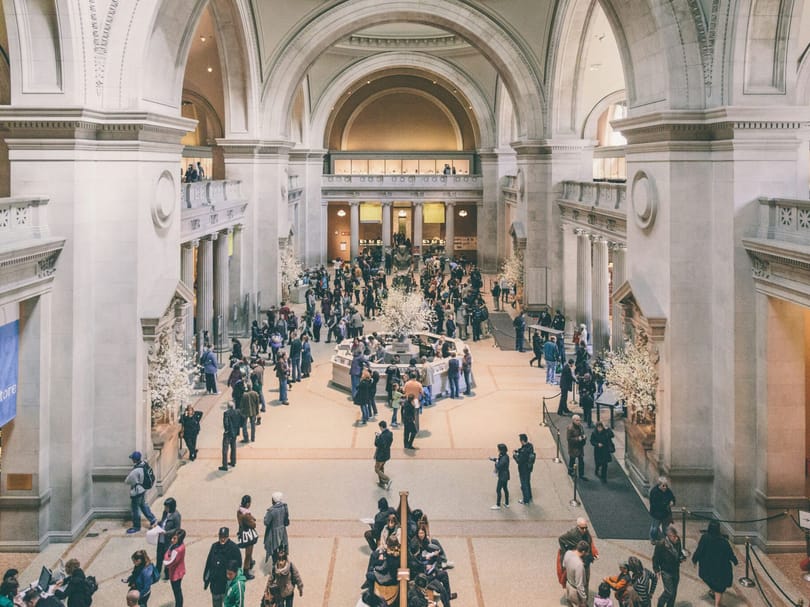
People walking through the Met in NYC
Visitors in the Met's galleries
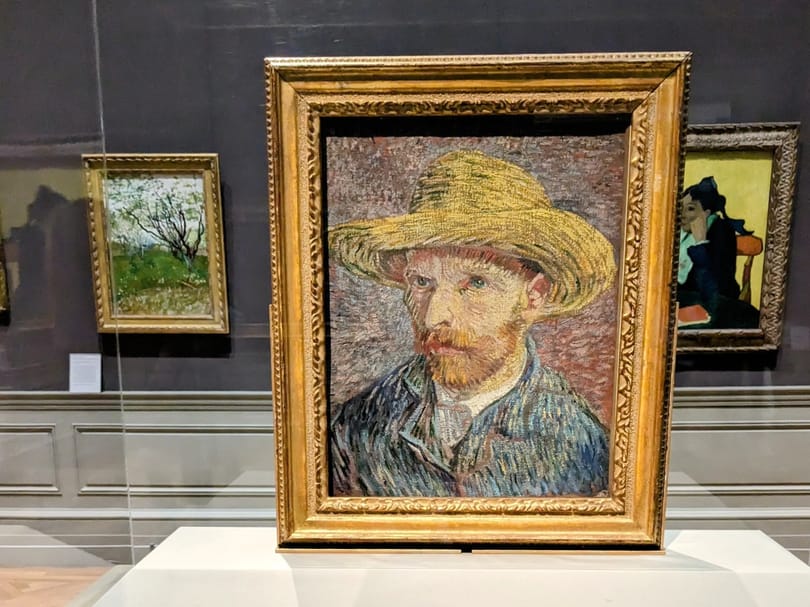
Vincent van Gogh's Self-Portrait with a Straw Hat

Stop 4: European Paintings

Climb the Great Hall's grand staircase to the European Paintings galleries on the second floor. This is where you'll want to slow down. The Met is one of the few museums in the world with several paintings by Johannes Vermeer, and it holds a remarkable group of Rembrandts, including a self-portrait from late in his life.

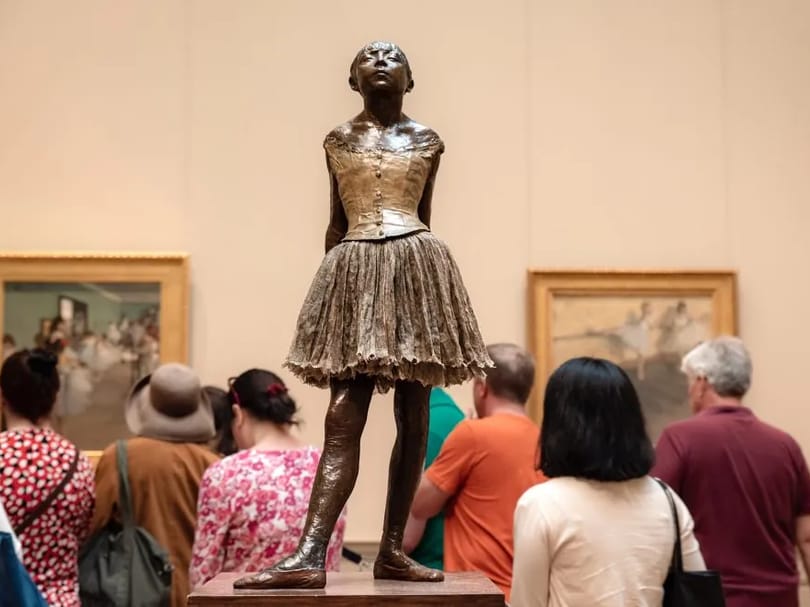
Continue into the 19th-century rooms for the crowd-pleasers: Monet's water lilies and haystacks, Van Gogh's Wheat Field with Cypresses and his Self-Portrait with a Straw Hat, and a whole gallery of Degas dancers.

Dancer sculpture by Edgar Degas inside the Metropolitan Museum of Art
A Degas dancer sculpture at the Met

Stop 5: The roof garden (seasonal)

End on a high note. In the warmer months, usually from spring into fall and weather permitting, the Cantor Roof Garden opens above the museum, with a new site-specific art commission each year and sweeping views over the treetops of Central Park to the skyline. Check the Met's website before you go to confirm it's open, then grab a drink at the rooftop bar and rest your feet.

Museum Mile: what's next door

The Met anchors Museum Mile, the stretch of Fifth Avenue along Central Park that's home to a remarkable concentration of museums. A few blocks north, Frank Lloyd Wright's spiraling Guggenheim opened in 1959. Nearby you'll find the Neue Galerie, home to Gustav Klimt's famous gold portrait of Adele Bloch-Bauer, and the Cooper Hewitt design museum in Andrew Carnegie's former mansion. Pick one for the afternoon only if you still have energy; the Met alone is a full morning's work.

Your three-hour Met route

  • Arrive at opening with a timed ticket booked online
  • Egyptian galleries to the Temple of Dendur
  • Arms and Armor and the parade of mounted knights
  • The American Wing courtyard and Washington Crossing the Delaware
  • European Paintings: Vermeer, Rembrandt, Monet, Van Gogh and Degas
  • Finish on the Cantor Roof Garden (seasonal)
  • Lunch, then Central Park or Museum Mile

Let an expert do the navigating

The fastest way to see the best of the Met is with someone who knows every shortcut. Our Metropolitan Museum of Art Highlights Tour takes you straight to the masterpieces with a guide who brings them to life. For art lovers who want more time and more depth, The Met in Depth: A Guided Experience is our premium, slower-paced way to explore the collection.

New York Experience is run by ExperienceFirst, a New York tour company founded in 2009.

The Met FAQs

Only for New York State residents and students from New York, New Jersey and Connecticut, with proof of eligibility. Other visitors pay a fixed general admission price. Children under 12 go free with an adult.
Plan on about three hours to see the main highlights at a comfortable pace. Dedicated art lovers can easily spend a full day, or several.
Right at opening time on a weekday. Galleries are quietest in the first hour, before tour groups and school visits arrive.
No. The Cantor Roof Garden is seasonal, typically open from spring into fall, and can close for bad weather. Check the Met's website before your visit.
In its own glass-walled wing off the Egyptian galleries on the first floor, overlooking Central Park.