All posts

September 23, 2026

Visiting the 9/11 Memorial & Museum: A Thoughtful Guide

There is no other place in New York quite like the 9/11 Memorial. In the middle of one of the busiest business districts on earth, the noise of Lower Manhattan softens into the sound of falling water. People speak quietly. Some trace names with their fingertips. Others simply stand and look down into the pools.

For many visitors it's the most meaningful stop on their trip, and also the one they feel least prepared for. This guide explains what you'll find at the World Trade Center site, how to plan your time, how to approach a visit with children and how to pair it with the view from One World Observatory. Opening hours, ticketing and policies can change, so check the official 9/11 Memorial & Museum website before you go.
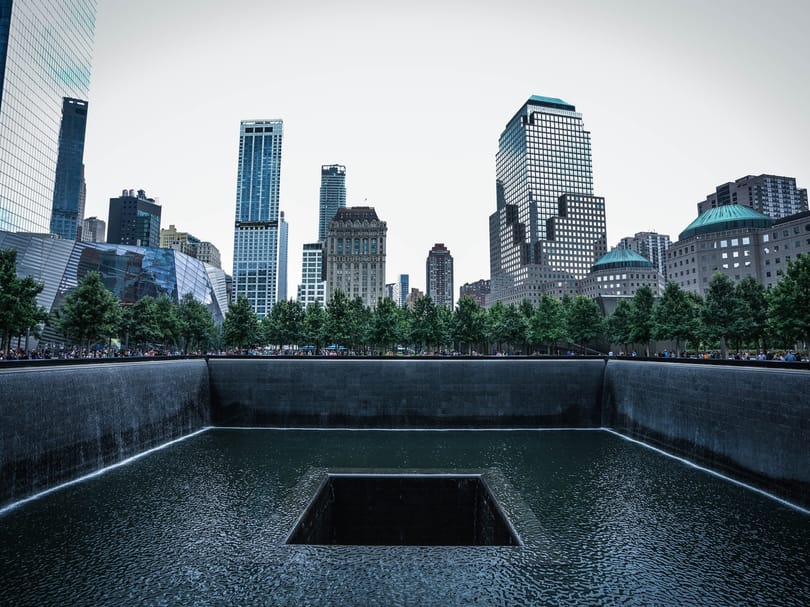
Water cascading down the sides of one of the 9/11 Memorial reflecting pools
Water cascading into one of the memorial's reflecting pools

The memorial: two pools where the towers stood

The memorial opened on September 11, 2011, the tenth anniversary of the attacks. Its design, called Reflecting Absence, is by architect Michael Arad and landscape architect Peter Walker. Two enormous square pools, each nearly an acre, sit within the footprints of the original North and South Towers. Water falls about 30 feet down their sides into a reflecting basin, then disappears into a smaller central void you can't see the bottom of.

Around the edges, bronze parapets carry the names of the 2,977 people killed on September 11, 2001, in New York, at the Pentagon and aboard Flight 93, along with the six people killed in the World Trade Center bombing of February 26, 1993. The names aren't alphabetical. They're arranged according to "meaningful adjacencies," placing colleagues, friends and family members side by side at the request of loved ones.

The memorial plaza is free and open to everyone, and you don't need a ticket to walk around the pools.

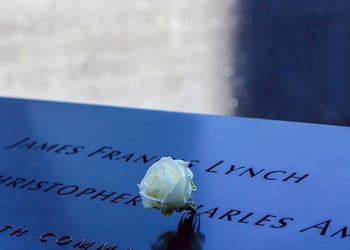
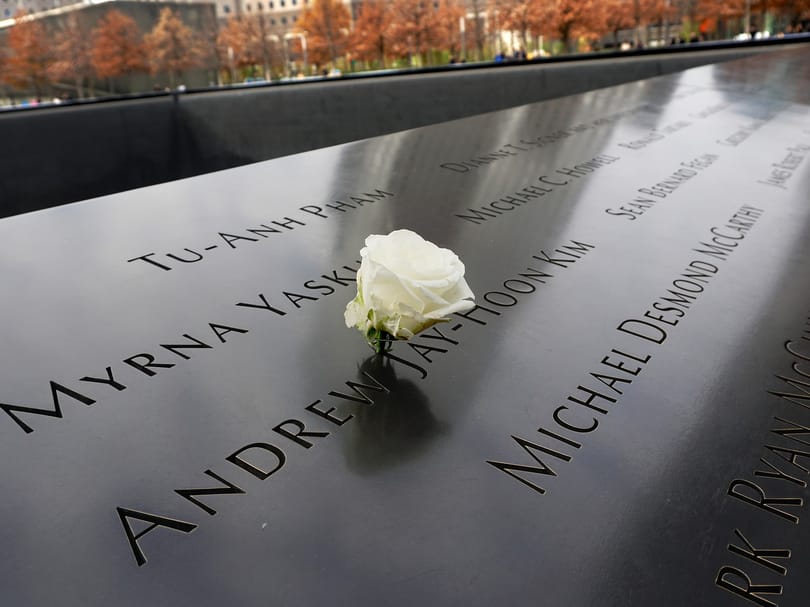
White Rose on 9/11 Memorial parapet
A white rose left on a name for a birthday

The white roses

As you walk the parapets, you may notice a single white rose tucked into one of the names. Memorial staff place one each day on the names of those whose birthday it is. It's a small, quiet gesture, and one of the most moving details of the site.

Visitors often leave flags, flowers or notes too. If you'd like to make a name rubbing, ask a memorial staff member; paper and pencils have traditionally been available at the site.

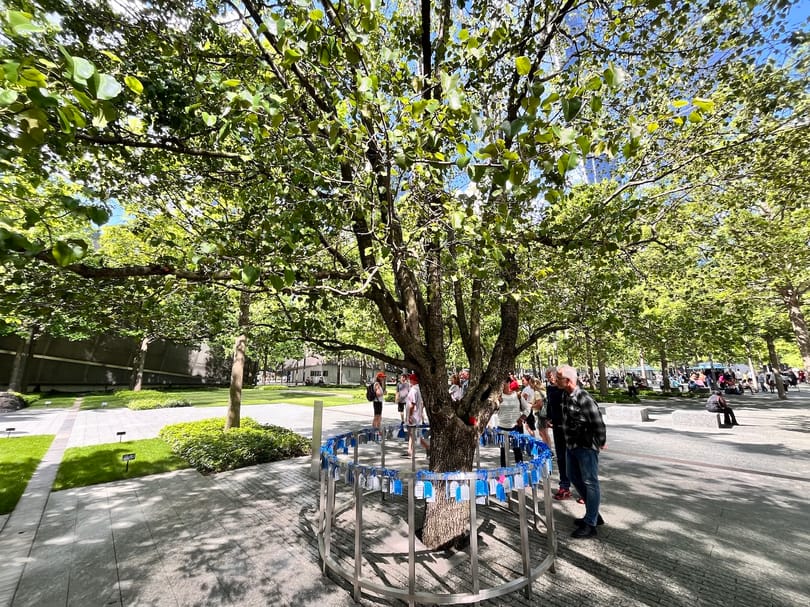
Survivor Tree in NYC
The Survivor Tree on the memorial plaza

The Survivor Tree

Among the swamp white oaks that fill the plaza, one tree looks different. The Survivor Tree is a Callery pear that stood near the original towers. In October 2001, recovery workers found it in the rubble, badly burned and snapped, with just a little life left in it.

The tree was taken to a New York City Parks nursery in the Bronx, where it was nursed back to health, and in 2010 it was replanted on the memorial plaza. Today it blooms white every spring. Seedlings from the tree have been given to communities around the world that have lived through their own tragedies, a living symbol of resilience.

Look for the Survivor Tree near the South Pool. Many visitors find it the best place to pause before or after the museum.

Inside the 9/11 Museum

The museum opened in May 2014 and lies mostly underground, descending to bedrock level beneath the plaza. It's a timed-ticket attraction, and advance booking is strongly recommended, especially in summer and on weekends.

Some of the most powerful spaces include:

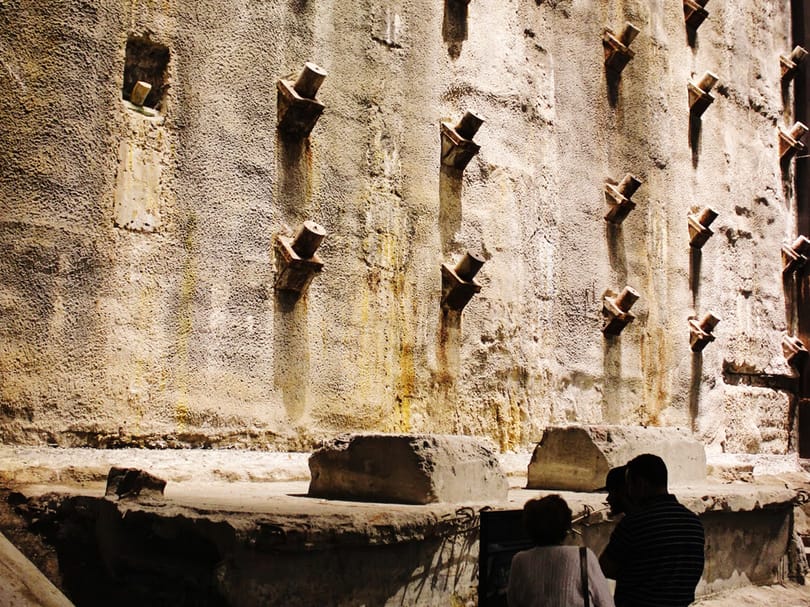
  • Foundation Hall, where a surviving section of the original slurry wall, built to hold back the Hudson River, rises beside the Last Column, a steel beam covered with mementos and inscriptions left by recovery workers.
  • The Survivors' Stairs, a staircase that became an escape route for hundreds of people fleeing the site that morning.
  • The Historical Exhibition, which tells the story of the day minute by minute through artifacts, photographs and recorded voices. It's intense, and photography is not permitted inside.
  • In Memoriam, a gallery with portraits of the victims, where you can learn about individual lives.

Most people spend at least two hours in the museum. Take breaks when you need them; there are quieter spaces throughout, and nobody will think twice if you step out.

Slurry Wall, 9/11 museum
The original slurry wall inside the museum's Foundation Hall
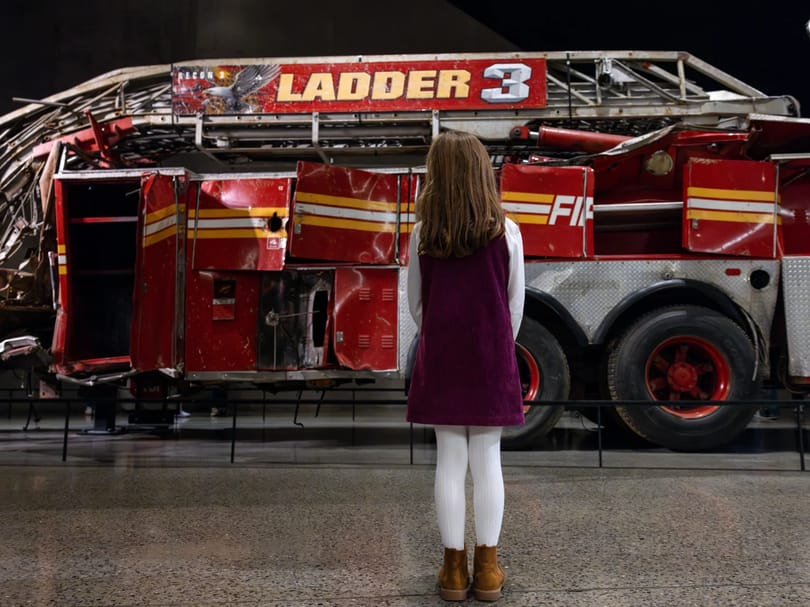
Girl looking at Ladder 3 exhibit in the 9/11 Museum
A young visitor at the Ladder 3 fire truck exhibit (Credit: David Starke)

Visiting with children

Families visit every day, and the memorial plaza is suitable for all ages. The museum is a more personal decision. The museum itself notes that some content, especially in the Historical Exhibition, may not be suitable for young children, and it provides resources to help parents prepare.

  • Talk to children beforehand about what they'll see, in language that fits their age.
  • Consider visiting the plaza and the Survivor Tree with younger kids, and letting older children decide whether to see the museum.
  • Parts of the museum, such as the Ladder 3 fire truck and the Foundation Hall, speak more to courage and recovery, and can be a gentler way in.
  • Plan something uplifting afterward, like the ride up One World Observatory or a walk to the waterfront.

When to go and how long to allow

Allow about 30 minutes to an hour for the memorial and at least two hours for the museum. Mornings are usually calmer; the plaza can be very busy by midday in peak season. Visiting in the early evening, when the office crowds have gone and the light softens, is particularly peaceful.

On September 11 each year, the memorial holds a ceremony for victims' families. The plaza is reserved for families until mid-afternoon (in recent years it has opened to the public at 3 p.m.), and the museum is closed to the public all day. That evening, the Tribute in Light sends two columns of light into the sky above Lower Manhattan, visible for miles.

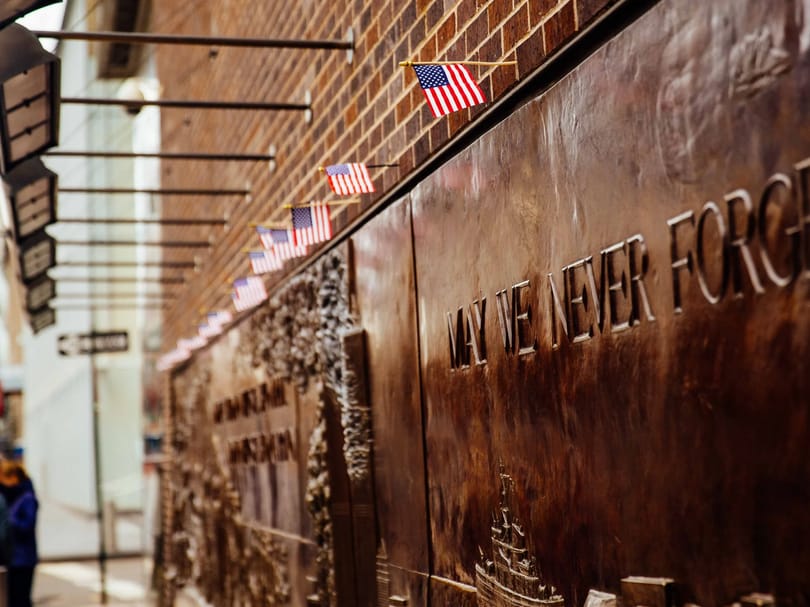
Nearby, take time for the FDNY Memorial Wall on the side of the Engine 10 and Ladder 10 firehouse on Liberty Street, and for St. Paul's Chapel on Broadway, which served as a place of rest for recovery workers in the months after the attacks. The Memorial Glade, dedicated in 2019, honors rescue and recovery workers and others who became sick or died from exposure to toxins at the site.

911 Ground Zero firefighter memorial up close
The firefighters' memorial beside the Ten House firehouse
The welcome center at One World Observatory

Pairing your visit with One World Observatory

Rising 1,776 feet above the plaza, One World Trade Center opened in 2014 and is the tallest building in the Western Hemisphere. Its observatory, on the top floors, is reached by elevators that climb more than 100 floors in under a minute while the walls show a time-lapse of Manhattan's development over the centuries.

Many visitors find the observatory a natural second half to the day: after the reflection of the memorial, it offers a sense of perspective and of a city that rebuilt. If you're weighing it against Midtown's viewpoints, our comparison of Top of the Rock vs One World Observatory can help you choose.

Before you visit

  • Book timed museum tickets in advance and check current opening hours
  • Allow at least three hours for the memorial and museum together
  • Bring a light layer, as the underground galleries can be cool
  • Expect a security screening at the museum entrance and keep bags small
  • Find the Survivor Tree near the South Pool
  • Look for the white roses placed on birthdays
  • Visit St. Paul's Chapel and the FDNY Memorial Wall nearby
  • Plan a quieter moment afterward, perhaps by the Hudson River waterfront

Visit with a guide who knows the story

A knowledgeable guide can help you understand the site, the rebuilding and the stories behind the names. Our 9/11 Ground Zero Insider Tour walks the memorial and surrounding area, and the VIP 9/11 Ground Zero Tour With 9/11 Museum adds guided time inside the museum. For a deeper, more personal visit, the 9/11 Ground Zero Experience With Docent-Led Tour is led by a museum docent.

New York Experience is run by ExperienceFirst, a New York tour company founded in 2009.

9/11 Memorial & Museum FAQs

Yes. The memorial plaza with its two reflecting pools is free and open to the public. The 9/11 Museum requires a ticket, and timed entry is recommended.
Most visitors spend around two hours in the museum, plus 30 minutes to an hour at the memorial pools. Allow extra time if you'd like to see everything.
Photography is allowed on the memorial plaza and in most of the museum, but not inside the Historical Exhibition or the In Memoriam gallery. Please be respectful of other visitors.
The memorial is suitable for all ages. The museum advises that some content may not be suitable for young children, so parents should decide based on their child's age and maturity.
A Callery pear found badly damaged in the rubble in October 2001. It was nursed back to health in the Bronx and replanted on the memorial plaza in 2010, where it blooms each spring.