All posts

September 23, 2026

Williamsburg Beyond the Hype: A Neighborhood Guide

Williamsburg has been called many things over the past twenty-five years: the capital of cool, the epicenter of gentrification, a playground for the young and moneyed. All of that is partly true, and none of it tells the whole story. Look past the rooftop bars and glass towers and you'll find a neighborhood with deep industrial roots, one of the oldest Italian-American festivals in the city, a large Hasidic community and a waterfront that's been reinvented for the public.

This guide is for curious visitors who want to see it all: the new Williamsburg and the old one, side by side. As always, shops and restaurants change quickly here, so check current hours before you go.
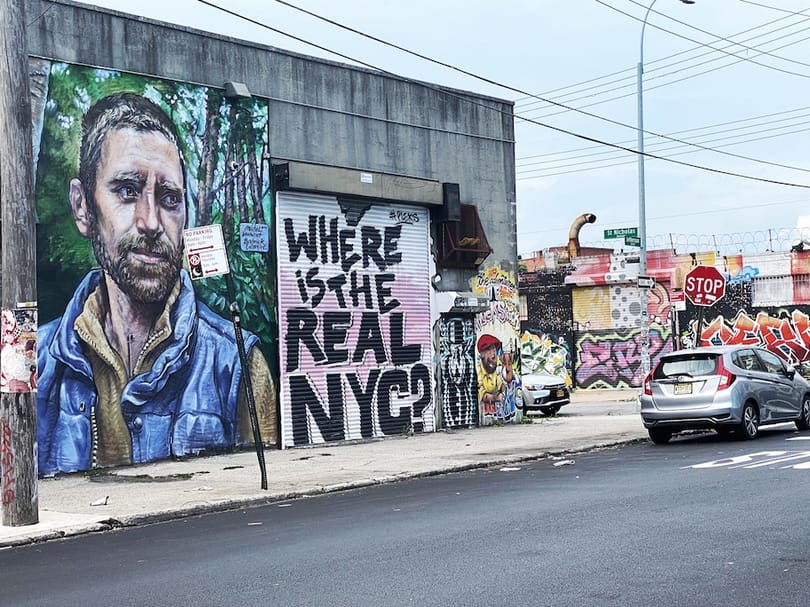
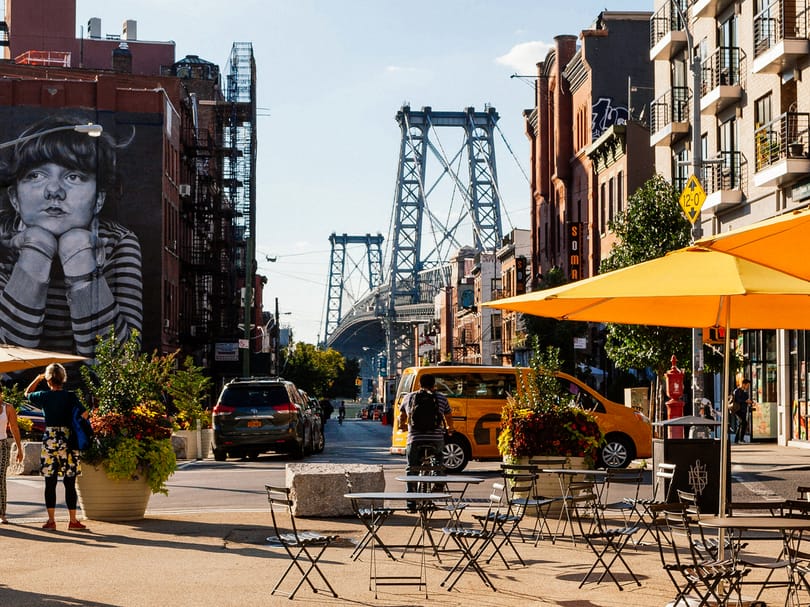
Brooklyn murals in NYC
Murals are part of the Brooklyn streetscape. Credit: Anushila Shaw

From village to industrial powerhouse

Williamsburg takes its name from Jonathan Williams, the surveyor who laid out its early streets around 1800. For a while it was an independent city, before merging into the City of Brooklyn in 1855. Its waterfront soon filled with shipyards, breweries, factories and, most famously, sugar refineries, and by the late 1800s it was one of the busiest industrial districts in the country.

The opening of the Williamsburg Bridge in 1903, then the longest suspension bridge in the world, changed everything. Tens of thousands of families, many of them Jewish immigrants escaping the crowded tenements of the Lower East Side, crossed the river to settle here. Italian, Polish, Puerto Rican and Dominican communities followed, each leaving a mark that you can still see today.

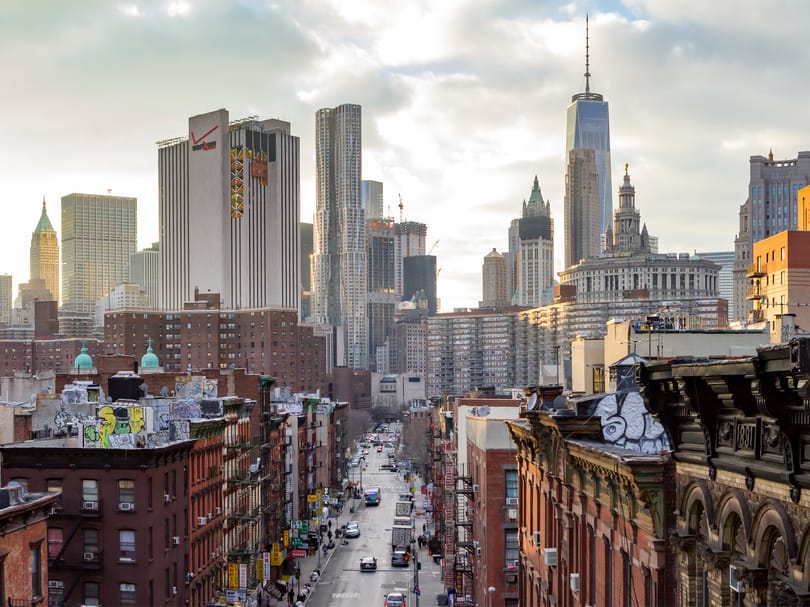
Lower Manhattan's towers at sunset, with One World Trade Center rising above the rooftops

The waterfront: Domino Park and beyond

For more than a century, the Domino Sugar Refinery dominated the Williamsburg waterfront, and at its peak it was one of the largest sugar refineries in the world. It closed in 2004, and the handsome brick refinery building is now a protected landmark at the center of a huge redevelopment.

Domino Park, opened in 2018, runs along the river beside it. Its designers kept pieces of the old factory, including towering syrup tanks, gantry cranes and screw conveyors, and turned them into sculptures, walkways and playgrounds. It's a great place for a picnic with a skyline view.

A little farther north, Marsha P. Johnson State Park, named in 2020 for the pioneering LGBTQ activist, offers more lawns and river views, and it has hosted the weekend food market Smorgasburg in season.

Bedford Avenue and the North Side

The L train's Bedford Avenue stop is the gateway to the neighborhood many visitors picture: coffee shops, record stores, vintage clothing, independent bookstores and bars. Artists began moving into the North Side's cheap industrial lofts in the 1980s and 1990s, and by the 2000s Williamsburg had become shorthand for a whole new kind of Brooklyn cool.

A 2005 rezoning opened the waterfront to residential towers, and the neighborhood changed fast. Some of the scrappy creative spaces moved east to Bushwick and beyond, but Williamsburg still has a strong live music scene, with well-known venues like Music Hall of Williamsburg and Brooklyn Bowl, and some of the best people-watching in the city.

Where to wander

  • Bedford Avenue between North 4th and North 10th Streets for shops and cafés
  • Wythe Avenue and Kent Avenue for converted warehouses, hotels and rooftop views
  • McCarren Park, the neighborhood's backyard, with its restored 1930s public pool
  • The Brooklyn Brewery on North 11th Street, brewing in Williamsburg since 1996, with a tasting room

A true Williamsburg institution: long before the neighborhood was trendy, Peter Luger Steak House was drawing diners from all over the city to its spot beneath the Williamsburg Bridge. It has been serving porterhouse steaks since 1887. It's old-school in every sense, so check its current payment and reservation policies before you go.

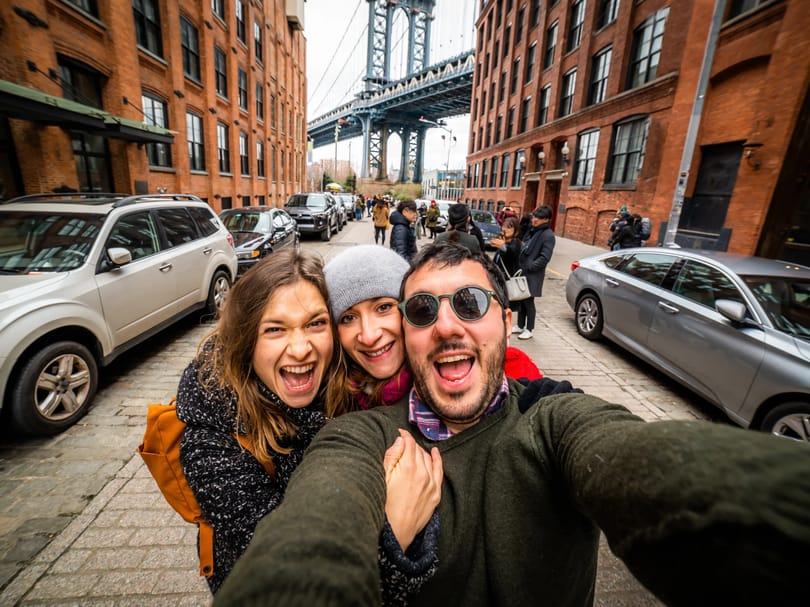
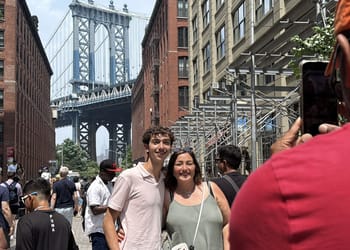
Friends Taking Selfie in Brooklyn NYC
Friends taking a selfie on a cobblestone street in DUMBO, with the Manhattan Bridge behind them

The South Side and South Williamsburg

Walk south of the Williamsburg Bridge and the neighborhood's character shifts again. The South Side has long been home to a large Puerto Rican and Dominican community, and you'll hear Spanish on the street, see murals celebrating Latino culture and find classic bakeries and lunch counters.

Farther south is one of the largest Hasidic Jewish communities in the world, which grew here after World War II when many Holocaust survivors settled in the area. It's a deeply traditional and private community, so the best approach is respectful curiosity: dress modestly, don't photograph people without permission, and remember that shops close for the Sabbath from Friday evening to Saturday night. Kosher bakeries here are famous for their rugelach and challah.

Italian Williamsburg and the Giglio feast

In the northeast of the neighborhood, around Our Lady of Mount Carmel Church on North 8th Street, you'll find the remnants of Italian Williamsburg. Every July, the parish hosts the Feast of Our Lady of Mount Carmel and San Paolino, known simply as the Giglio. Its highlight is extraordinary: teams of men lift and "dance" a towering, multi-ton spire decorated with a statue of Saint Paulinus through the streets, to the music of a brass band. The tradition traces back to the town of Nola near Naples, and has been celebrated in Williamsburg for more than a century. If you're in town, it's one of the most memorable street festivals in New York. Check the parish's current dates.

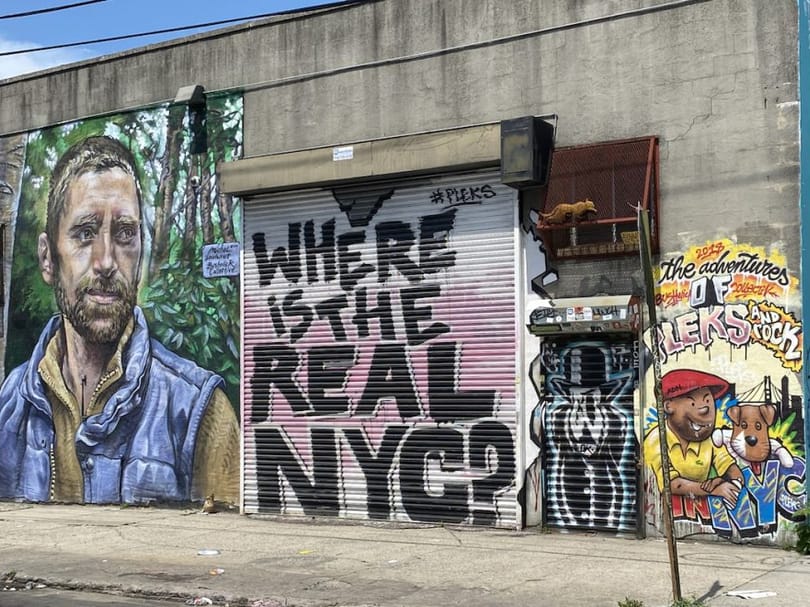
Street art in neighboring Bushwick

Keep going: Bushwick

If you have more time, ride the L train a few stops east to Bushwick, where former warehouses are covered in large-scale murals. The area around the Jefferson Street station is the best place to start a street art walk.

Williamsburg in a day

  • Arrive by L train at Bedford Avenue or by NYC Ferry
  • Browse Bedford Avenue's shops and cafés
  • Picnic in Domino Park with a skyline view
  • Check what's on at the Brooklyn Brewery tasting room
  • Walk under the Williamsburg Bridge to the South Side
  • Respectfully visit a kosher bakery in South Williamsburg
  • Catch sunset from the waterfront or a rooftop
  • End with live music on the North Side

See Brooklyn and beyond with a guide

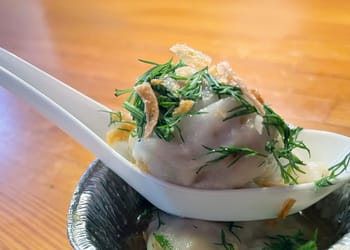
Williamsburg is just one chapter of Brooklyn's story. Our Brooklyn, Bronx and Queens bus tour shows you the neighborhoods, landmarks and cultures of three boroughs in a single day, and the private luxury car version lets you set your own pace. Prefer to eat your way around Brooklyn? Try our Guided DUMBO Foodie Experience.

New York Experience is run by ExperienceFirst, a New York tour company founded in 2009.

Williamsburg FAQs

The L train to Bedford Avenue is the most popular route, just one stop from Manhattan. The J, M and Z trains stop at Marcy Avenue, and the NYC Ferry stops at North and South Williamsburg.
Yes. The bridge has a pedestrian and bike path connecting the Lower East Side with South Williamsburg. It's less crowded than the Brooklyn Bridge.
A waterfront park opened in 2018 beside the former Domino Sugar Refinery, with salvaged factory machinery, playgrounds, lawns and skyline views.
It's held every July around Our Lady of Mount Carmel Church. Check the parish's announcements for the current year's dates.
Yes, especially if you want to see a very different side of New York: waterfront parks, independent shops, live music and a fascinating mix of communities all in one neighborhood.