All posts

September 23, 2026

New York's Art Deco Gems: A Self-Guided Architecture Walk

In the late 1920s and early 1930s, New York built as if it were in a hurry to reach the sky. The style of the moment was Art Deco: sleek, geometric, optimistic and unashamedly glamorous, with zigzags, sunbursts, stylized plants and gleaming metal. Much of Midtown's most beloved architecture dates from that short burst of creativity, bridging the boom of the Roaring Twenties and the depths of the Great Depression.

This self-guided walk links the best of it in about two miles. Allow two to three hours with time to linger. Most of these buildings are working offices or hotels, so lobby access can change; be respectful, stay out of the way of people working there and don't be disappointed if a door is closed. The exteriors alone are worth the walk.
The walk at a glance

Start
Lexington Avenue and 42nd Street
Finish
Radio City Music Hall
Distance
About 2 miles
Time
2 to 3 hours
Best time
Weekday mornings

Stop 1: the Chrysler Building

405 Lexington Avenue, at 42nd Street

Start with the building many architects consider the most beautiful skyscraper ever built. Designed by William Van Alen for automobile magnate Walter P. Chrysler and completed in 1930, it briefly reigned as the tallest building in the world at 1,046 feet, thanks to a spire that was secretly assembled inside the crown and hoisted into place in about 90 minutes. (Read the full story of that rivalry in our history of New York's race to the sky.)

The building is a love letter to the automobile. Look up and you'll spot:

  • A band of brickwork with stylized hubcaps and fenders.
  • Winged ornaments at the corners inspired by Chrysler's radiator caps.
  • Gleaming steel eagles jutting out from the upper floors like hood ornaments.
  • The crown itself, stacked arches of stainless steel pierced by triangular windows that sparkle at sunset and glow at night.

The lobby, with its red marble walls and a vast ceiling mural celebrating transportation and human endeavor, is one of the great Deco interiors. It's generally open to visitors during weekday business hours, though access has varied over the years. If it's open, step inside quietly.

Stop 2: the Chanin Building

122 East 42nd Street, at Lexington Avenue

Directly across the intersection, the Chanin Building (1929) is easy to overlook, but look closely at its base. A band of terracotta and bronze ornament swirls with leaves, flowers and sea creatures. Developer Irwin S. Chanin, who had risen from modest beginnings, commissioned lobby decoration by sculptor René Paul Chambellan on the theme of the "City of Opportunity," with bronze grilles celebrating the rewards of hard work.

A quick detour: Grand Central Terminal

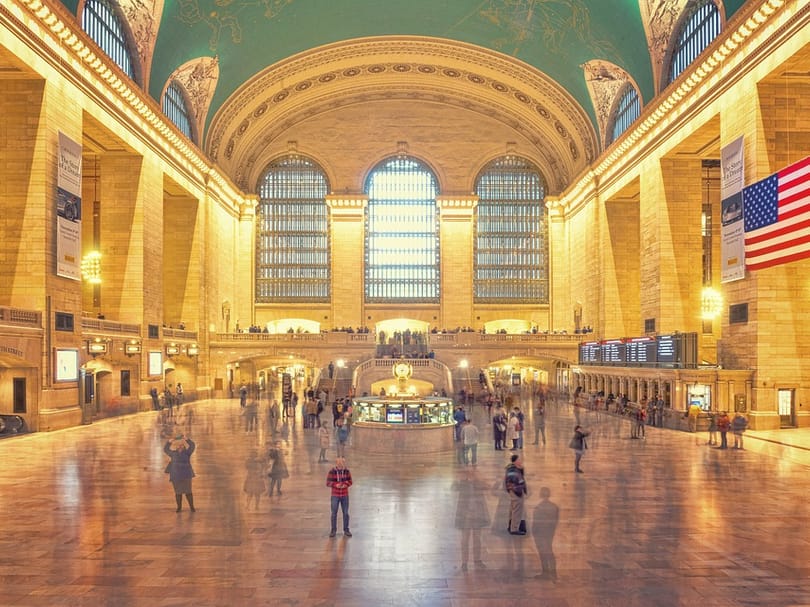
One block west, Grand Central (1913) isn't Art Deco but Beaux-Arts, its elegant predecessor. Pop in to compare the two styles: classical grandeur in the Main Concourse, versus the streamlined modernity you'll see on the rest of this walk.

The Main Concourse at Grand Central Terminal
The Beaux-Arts Main Concourse of Grand Central Terminal

Stop 3: the Daily News Building

220 East 42nd Street, between Second and Third Avenues

Walk east along 42nd Street to this 1930 tower by Raymond Hood and John Mead Howells, one of the first skyscrapers to abandon a decorative crown in favor of bold vertical stripes of brick. Above the entrance, a carved relief shows crowds of people beneath a sunburst.

The real treat is inside the lobby: a giant globe, sunk into the floor beneath a black glass dome, surrounded by clocks and weather instruments. Movie fans may recognize the building as the Daily Planet in the 1978 Superman film. The newspaper moved out decades ago, but the name stuck.

Stop 4: 570 Lexington Avenue

Lexington Avenue at 51st Street

Head north on Lexington to one of Midtown's most extraordinary crowns. Completed in 1931 by Cross & Cross for the RCA Victor company, and later known as the General Electric Building, this slim tower of salmon-colored brick is topped by a spiky Gothic-Deco crown meant to evoke radio waves and electricity. Look for the lightning bolts and zigzags at street level too. Its warm brick was chosen to harmonize with its neighbor, St. Bartholomew's Church.

Stop 5: the Waldorf Astoria

301 Park Avenue, between 49th and 50th Streets

One block west, the Waldorf Astoria moved here from Fifth Avenue in 1931 after its original site was sold for the Empire State Building. Designed by Schultze & Weaver, it became the city's most glamorous hotel, host to presidents, royalty and the famous grand lobby clock, a bronze masterpiece first shown at the 1893 World's Columbian Exposition in Chicago. The building closed in 2017 for a long renovation and reopened in 2025 as a smaller hotel with private residences above. Admire the twin-towered silhouette from Park Avenue, and check whether its public spaces are open when you visit.

Spotter's guide: Art Deco details to look for on any 1920s or 1930s building include setbacks that make towers step back like wedding cakes, sunbursts and chevrons, stylized plants and animals, and metalwork in bronze, aluminum and stainless steel around doors, mailboxes and elevators. Once you start noticing them, you'll see them all over Midtown.

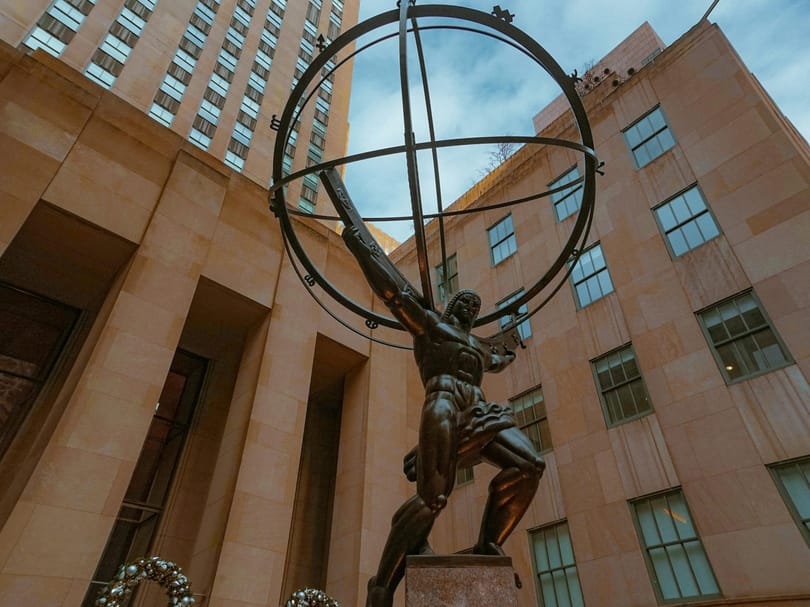
Close up of Atlas Statue in Rockefeller Plaza NYC
Atlas holding up the heavens on Fifth Avenue

Stop 6: Rockefeller Center

Between Fifth and Sixth Avenues, 48th to 51st Streets

Walk west to the grandest Art Deco ensemble in the world. Rockefeller Center was built during the Great Depression, financed by John D. Rockefeller Jr., and designed by a team of architects that included Raymond Hood. It's as much a gallery of public art as a business complex.

  • Atlas, facing St. Patrick's Cathedral on Fifth Avenue, is a 1937 bronze by Lee Lawrie and Rene Chambellan.
  • The Channel Gardens lead from Fifth Avenue down toward the sunken plaza, flanked by buildings once intended for French and British businesses.
  • Prometheus, Paul Manship's gilded figure of 1934, soars above the plaza, where the famous skating rink operates in winter.
  • Wisdom, Lee Lawrie's stern, bearded figure above the entrance of 30 Rockefeller Plaza, stares down with a compass, framed by a quotation from Isaiah.
  • News, a gleaming stainless steel relief by Isamu Noguchi, decorates the entrance at 50 Rockefeller Plaza.
Top of the Rock
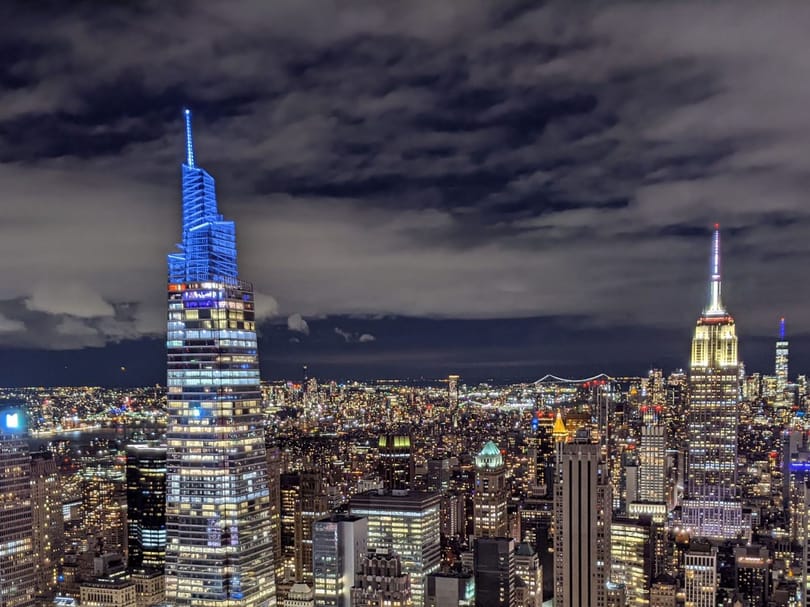
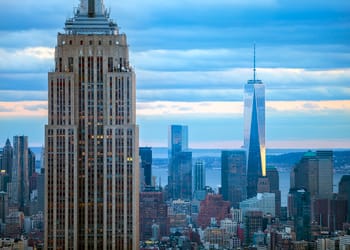
The view from Top of the Rock

Inside 30 Rock

The centerpiece tower, completed in 1933, has had several names, but many New Yorkers still simply call it 30 Rock. Its lobby holds murals by José Maria Sert, which replaced a controversial mural by Diego Rivera. Rivera included a portrait of Lenin, refused to remove it and saw his work covered up and destroyed in 1934.

This is also where you can ride up to Top of the Rock, the observation deck on the building's upper floors, with one of the best views of the Empire State Building. Our guide to Top of the Rock vs One World Observatory explains what to expect.

Radio City Music Hall in New York City
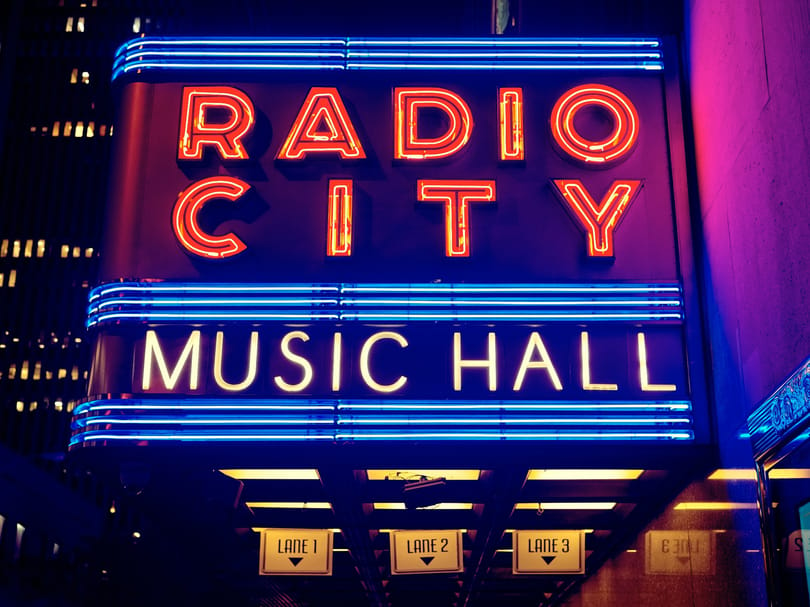
Radio City Music Hall on Sixth Avenue

Stop 7: Radio City Music Hall

Sixth Avenue at 50th Street

Finish at the corner of Sixth Avenue, where the red neon marquee of Radio City Music Hall wraps around the block. Opened in December 1932, it was the largest indoor theater in the world at the time. Designer Donald Deskey filled the interior with Deco furnishings, from the lounges to the light fixtures, and the Great Stage is framed by a vast proscenium arch that resembles a setting sun.

To see inside, catch a show or look for guided tours of the building. Check current schedules on the venue's website.

Bonus stops if you have more time

  • The Empire State Building lobby, on Fifth Avenue at 34th Street, is a restored Deco showpiece with a famous metal relief of the building. Read our guide to the Empire State Building.
  • The American Radiator Building (1924), overlooking Bryant Park at 40 West 40th Street, is an early Raymond Hood tower of black brick trimmed with gold, a dramatic precursor of the Deco style.
  • The Fuller Building, at Madison Avenue and 57th Street, has a fine sculpted entrance and mosaic floors.

Art Deco details to spot

  • The hubcap frieze and radiator-cap ornaments on the Chrysler Building
  • The sea creatures and swirling leaves on the base of the Chanin Building
  • The globe in the Daily News Building lobby
  • The radio-wave crown of 570 Lexington Avenue
  • Atlas on Fifth Avenue
  • Prometheus above the sunken plaza
  • Wisdom above the door of 30 Rockefeller Plaza
  • Radio City's neon marquee

Let a guide show you the details

Much of the best Art Deco ornament is easy to walk past. On our Rockefeller Center Walking Tour With Top of the Rock Ticket, a guide reveals the art and stories of Rockefeller Center before you head up to the observation deck. For more of Midtown's towers, try the Skyscrapers & Summit Guided Experience or our Private Midtown NYC Walking Tour With Empire State Building.

New York Experience is run by ExperienceFirst, a New York tour company founded in 2009.

Art Deco New York FAQs

The Chrysler Building is a private office building with no observation deck. Its lobby is generally open to visitors during weekday business hours, but access has varied over the years, so be prepared to admire it from outside if the doors are closed.
The Chrysler Building is usually considered New York's Art Deco masterpiece, closely followed by the Empire State Building and Rockefeller Center.
The route covers about two miles. Allow two to three hours at a relaxed pace, or longer if you visit Top of the Rock or take a Radio City tour.
Yes. Rockefeller Center, built in the 1930s, is one of the largest and most complete Art Deco complexes in the world, with dozens of sculptures, reliefs and murals.