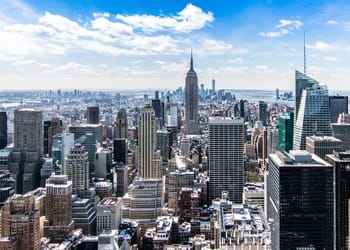
All posts

September 23, 2026

The Empire State Building: The Story of the World's Most Famous Skyscraper

There are taller buildings in New York now, and many much taller around the world. But ask anyone to picture a skyscraper and there's a good chance they'll imagine the stepped limestone tower and slender spire of the Empire State Building. For nearly a century it has been the city's great symbol, a movie star, a weather vane for the skyline and, every night, a beacon lit up in colors that tell New Yorkers what's being celebrated.

Here's the story of how it came to be, a few tales even locals don't know, and practical tips for visiting its famous observation decks.
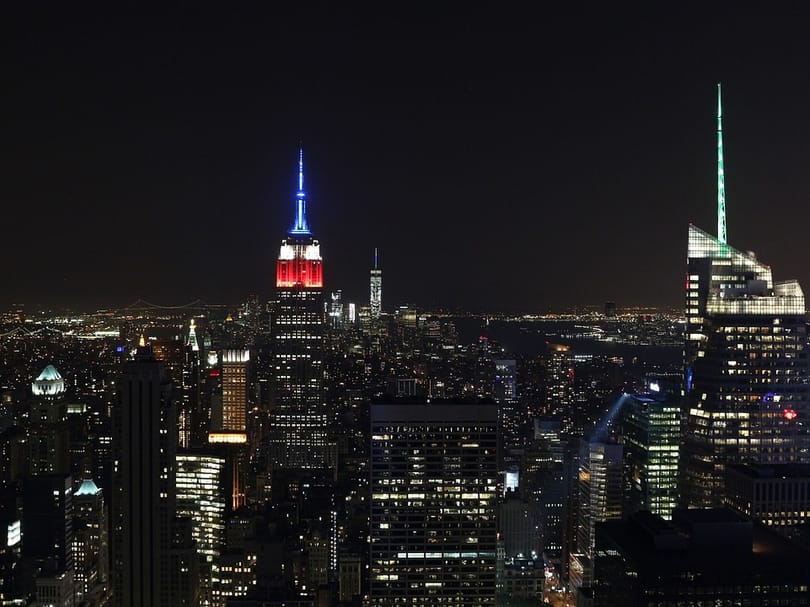
Empire State Building at Night
The Empire State Building lit up at night

A skyscraper on the site of a palace hotel

The corner of Fifth Avenue and 34th Street was once home to the original Waldorf-Astoria, the most glamorous hotel of the Gilded Age. By the late 1920s, fashionable New York had moved uptown, and the hotel was sold and demolished. The Waldorf-Astoria moved to Park Avenue, and in its place rose something even grander.

The project was backed by businessman John J. Raskob and industrialist Pierre S. du Pont, with former New York governor Al Smith as its public face. The architects, Shreve, Lamb & Harmon, with William F. Lamb as chief designer, produced a tower that tapers gracefully in a series of setbacks, as required by the city's 1916 zoning rules, finished with an Art Deco crown. For the full story of its rivalry with the Chrysler Building and 40 Wall Street, read our history of how New York invented the skyscraper skyline.

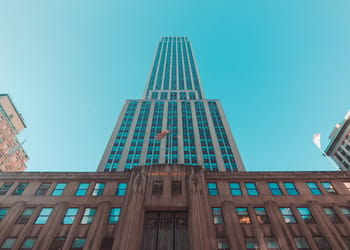
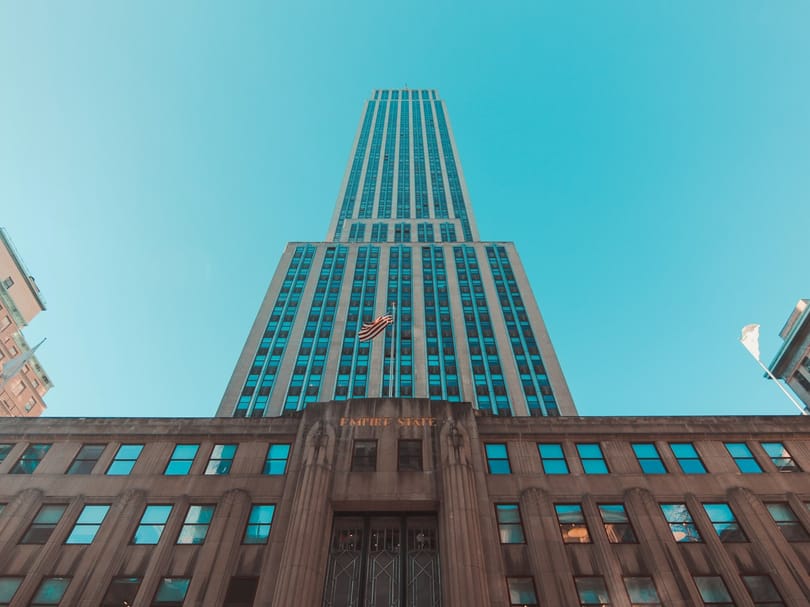
Empire State Building from the Ground Floor
Looking up at the tower from street level

Built in about a year

The speed of construction still astonishes engineers. Steelwork began in March 1930, and the building officially opened on May 1, 1931, a little over a year later. At its peak, the tower rose by several floors a week, thanks to an assembly-line approach: steel was fabricated in Pennsylvania, delivered just in time and riveted into place almost as soon as it arrived.

Thousands of workers were on site at the busiest times, many of them photographed by Lewis Hine balancing on beams high above Manhattan. At 1,250 feet to the roof and 102 stories, it was the tallest building in the world, a title it held for about four decades, until the North Tower of the World Trade Center overtook it in the early 1970s. With its antenna, the building's tip now reaches 1,454 feet.

The "Empty State Building"

The timing was terrible. The building opened in the depths of the Great Depression, and much of its office space sat unrented for years. Wags nicknamed it the "Empty State Building." What kept it afloat was the observation deck, which drew crowds of visitors from the start. Tourism, in other words, saved the world's most famous office building.

A mooring mast for airships

The spire was originally promoted as a docking station for dirigibles, where passengers would step off transatlantic airships onto a gangplank 1,000 feet in the air. The idea proved wildly impractical because of the strong winds at the top, and it was quietly abandoned. The mast found its true calling later, carrying broadcast antennas.

King Kong, fog and a record-breaking survival

Just two years after opening, the building became a movie legend when King Kong (1933) climbed its spire. Since then it has starred in everything from An Affair to Remember to Sleepless in Seattle and Elf, which is why so many visitors feel they know it before they arrive.

Its most dramatic real-life moment came on July 28, 1945, when a US Army B-25 bomber, lost in thick fog, crashed into the 79th floor. Fourteen people were killed. In the chaos, elevator operator Betty Lou Oliver survived a fall of roughly 75 stories when her elevator's cables snapped, a survival still recognized as a world record. Remarkably, parts of the building reopened within days.

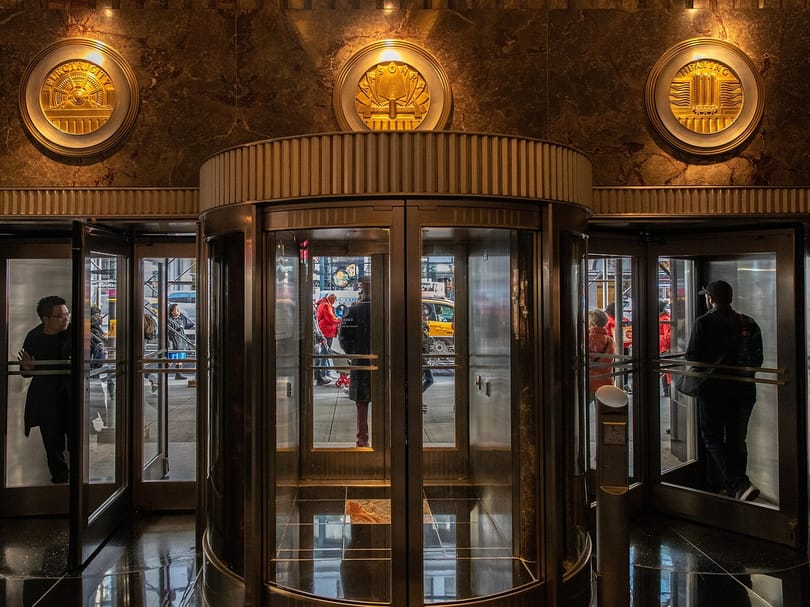
Empire State Building Lobby
The Art Deco lobby on Fifth Avenue

Don't skip the lobby

Many visitors rush straight to the elevators and miss one of the finest Art Deco interiors in New York. The Fifth Avenue lobby is a gleaming corridor of marble, with a famous metal relief of the building itself, radiating beams of light, on the main wall. The ceiling murals, featuring gears and celestial motifs in gold and aluminum leaf, were covered up for decades and restored in the 2000s.

If you love this style, our self-guided Art Deco walk links the Empire State Building with the Chrysler Building, Rockefeller Center and more.

The tower lights

The top of the building has been floodlit for decades, and since 2012 an LED system has allowed it to display millions of color combinations, including animated shows synchronized to music. The colors mark holidays, sporting victories, charities and moments of remembrance. The building publishes its lighting schedule online, so you can find out what tonight's colors mean.

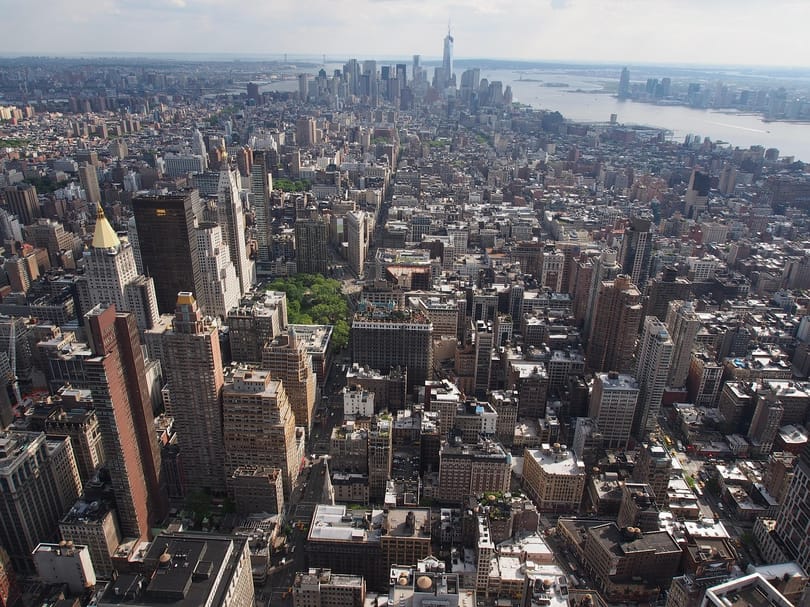
View from Empire State Building
Looking out over Manhattan from the observation deck

Visiting the observation decks

The observatory entrance is on West 34th Street, not Fifth Avenue. Your visit starts with exhibits covering the building's construction, its movie career and its engineering, before elevators whisk you upward.

  • The 86th floor is the classic open-air deck, about 1,050 feet up, wrapped around the building with the wind in your hair. This is the view from the movies, and the best place for photos without glass reflections.
  • The 102nd floor is a smaller, enclosed observatory near the top with floor-to-ceiling windows. It usually costs extra, but it's quieter and higher.

When to go

Sunset is the most popular (and most crowded) time. For a calmer visit, try first thing in the morning or late at night: the observatory typically stays open late, and Manhattan's lights below are unforgettable. Check the weather before you go, because low cloud can hide the view entirely, and confirm current hours and ticket options on the official website.

A view of the Empire State Building from the High Line
The Empire State Building seen from the High Line

Local tip: you can't see it from inside it

The one thing missing from the Empire State Building's view is the Empire State Building. For the classic postcard shot of the tower, head to another observatory such as Top of the Rock, which looks straight down the island toward it. At ground level, good viewpoints include Madison Square Park, the plaza by the Flatiron Building, sections of the High Line and the waterfront in DUMBO, Brooklyn. Unsure which observatory to choose? See our guide to Top of the Rock vs One World Observatory.

Empire State Building checklist

  • Book a timed ticket and check current hours online
  • Check the forecast for visibility before you go
  • Enter the observatory on West 34th Street
  • Pause in the Art Deco lobby on Fifth Avenue
  • Take photos from the open-air 86th floor deck
  • Decide in advance whether the 102nd floor is worth the upgrade
  • Look up the lighting schedule to decode tonight's colors
  • Photograph the tower from Top of the Rock or Madison Square Park

See Midtown's icons with a guide

Our Private Midtown NYC Walking Tour With Empire State Building pairs the stories of Midtown's landmarks with a visit to the building itself, just for your group. For a skyline-focused day, the Skyscrapers & Summit Guided Experience explores Midtown's towers before heading up to SUMMIT One Vanderbilt. And for the classic view of the Empire State Building, add a Top of the Rock ticket.

New York Experience is run by ExperienceFirst, a New York tour company founded in 2009.

Empire State Building FAQs

The building is 1,250 feet tall to its roof and 1,454 feet to the tip of its antenna, with 102 stories.
Steel construction began in March 1930, and the building officially opened on May 1, 1931, a little over a year later.
The 102nd floor is higher, enclosed and usually less crowded, but it typically costs extra. The open-air 86th floor deck is the classic experience and better for photos.
Early morning and late evening are usually the least crowded. Sunset is beautiful but busy. Check visibility before you go, as low cloud can hide the view.
The observatory entrance is on West 34th Street, between Fifth and Sixth Avenues.