All posts

September 23, 2026

Tracing your family at Ellis Island: how to research immigrant ancestors before and during your visit

Between 1892 and 1954, roughly 12 million people passed through the immigration station on Ellis Island. Their descendants today number in the tens of millions, and a good share of the visitors stepping off the ferry each morning are hoping to feel some connection to a great-grandparent who made the same crossing.

Walking through the Registry Room is moving on its own. But if you arrive knowing the name of the ship your ancestor sailed on, the date they landed and what the inspector wrote about them, the visit becomes something else entirely. Here's how to do the research before you go, what to look for on the island and how to avoid the most common family history myths.
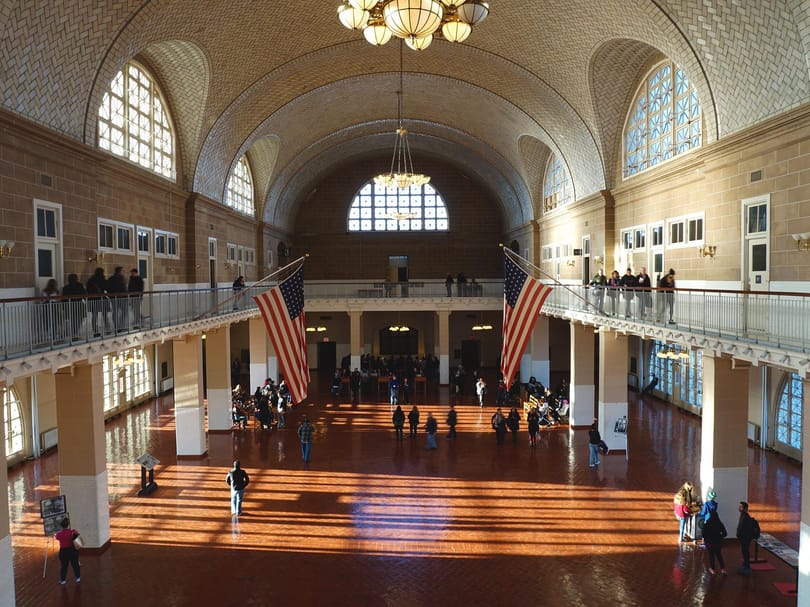
Registry Room inside the Ellis Island National Museum of Immigration
The Registry Room, where millions of new arrivals waited to be inspected

Step one: start at home, not on the island

The single most useful thing you can do is talk to relatives and gather what the family already knows. Before searching any database, try to pin down:

  • The immigrant's name as it was spelled in the old country, plus any variations. A Giuseppe may have become Joseph, and a Wojciech may have become Albert.
  • An approximate year of arrival. Even a five-year window narrows things enormously.
  • Their age at arrival, or a rough birth year.
  • Their hometown or region. This is often the key that unlocks a search when a name is common.
  • Who they traveled with or were joining, such as a spouse, sibling or cousin already in America.

Look through old papers, too. Naturalization certificates, family Bibles, letters and even gravestones often record a hometown or arrival year.

Where to search

The Statue of Liberty-Ellis Island Foundation runs a free online passenger database covering arrivals at the Port of New York, including the Ellis Island years and decades on either side. You'll need to create a free account to view full records and manifest images. Other good sources include FamilySearch, which is free, the U.S. National Archives, and subscription genealogy sites. Genealogists also swear by independent search tools, such as Stephen P. Morse's One-Step pages, that let you search the same records with more flexible spelling options.

immigrants arriving at Ellis Island
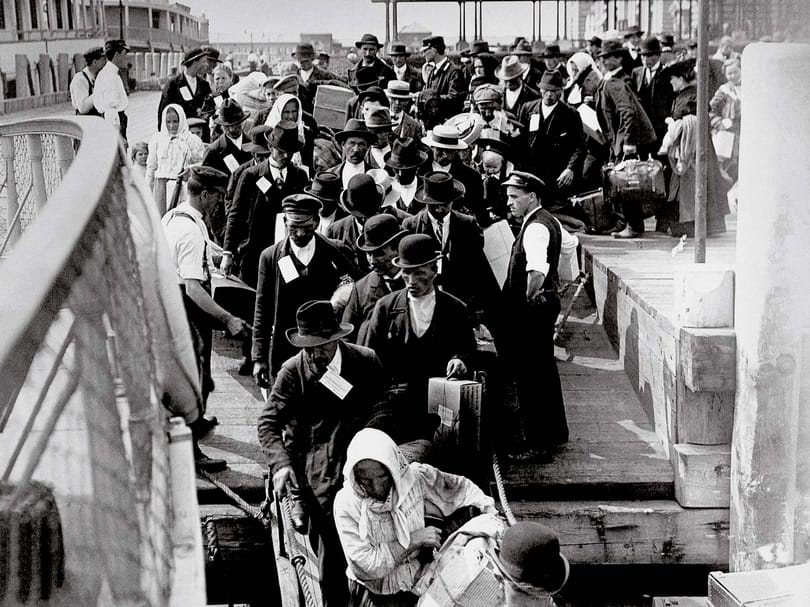
New arrivals at Ellis Island in the early 20th century

How to read a ship manifest

When you find a match, the real treasure is the scanned image of the original ship manifest. These large ledgers list every passenger on a voyage, line by line, and they can hold far more detail than a simple transcription.

Depending on the year, a manifest may record age, sex, marital status, occupation, whether the person could read and write, nationality, last place of residence, final destination in the United States, and who paid for the ticket. Manifests from the early 1900s onward often add even more: height, complexion, hair and eye color, the name of a close relative back home, and the name and address of the person they were joining in America. That last column can crack open a whole new branch of the family.

Manifests often run across two facing pages, so make sure you're looking at both halves of your ancestor's line. And look at the people listed just above and below them. Neighbors from the same village frequently traveled together.

The myth of the name changed at Ellis Island

Almost every family has a version of the story: "The officials at Ellis Island couldn't pronounce our name, so they changed it." It's a lovely tale, but historians have found little evidence for it.

Here's why. The manifests weren't written on Ellis Island. They were drawn up at the port of departure, often by shipping company clerks who spoke the passengers' language, and the inspectors in New York worked from those lists, with interpreters at hand. Their job was to check each person against the record, not to create a new identity. Most name changes happened later and voluntarily, as immigrants adopted American-sounding names at work, at school or when they became citizens. If you can't find your family under its current spelling, search for the original.

Other records that fill in the story

Arrival records are only one piece of the puzzle. If you hit a wall, these sources often break it down:

  • Naturalization papers. A "declaration of intention" and later "petition for naturalization" frequently name the ship and date of arrival, especially after 1906.
  • U.S. censuses. From 1900 onward, census takers often asked for the year of immigration and citizenship status. Censuses up to 1950 are now public.
  • World War I and II draft registrations. Many immigrant men registered and gave birthplaces and addresses.
  • Departure records. Some European ports kept their own passenger lists, which can confirm a hometown.
  • Church and local records in the old country. Once you know the village, baptism and marriage registers can take you back generations.
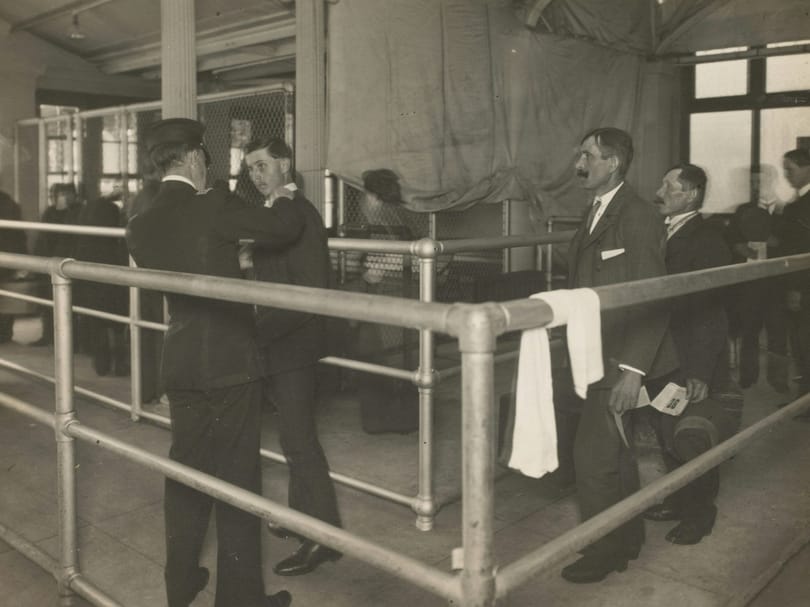
Greyscale image of men being medically inspected at Ellis Island
A medical inspection at Ellis Island

On the island: walking in their footsteps

Once you know when your ancestor arrived, you can trace their day through the building. New arrivals left the ferry from their ship, carried their bags into the baggage room and climbed the stairs to the Registry Room. Doctors stood watching as they climbed, looking for anyone who seemed short of breath, unsteady or unwell. Those who raised concern were marked on their coats in chalk, with letters indicating a suspected condition, and sent for a closer examination.

In the Registry Room, inspectors questioned each person against the manifest: name, destination, occupation, money, and whether anyone was waiting for them. For most people, the whole process took a few hours, and only a small percentage were ultimately turned away. The great vaulted ceiling above you, made of interlocking Guastavino tiles, was installed in 1918 after an explosion across the harbor damaged the original.

If your ancestor arrived between 1855 and 1890, they likely came through Castle Garden, today Castle Clinton in Battery Park, which served as the immigration depot for decades before Ellis Island opened.

The Wall of Honor and Annie Moore

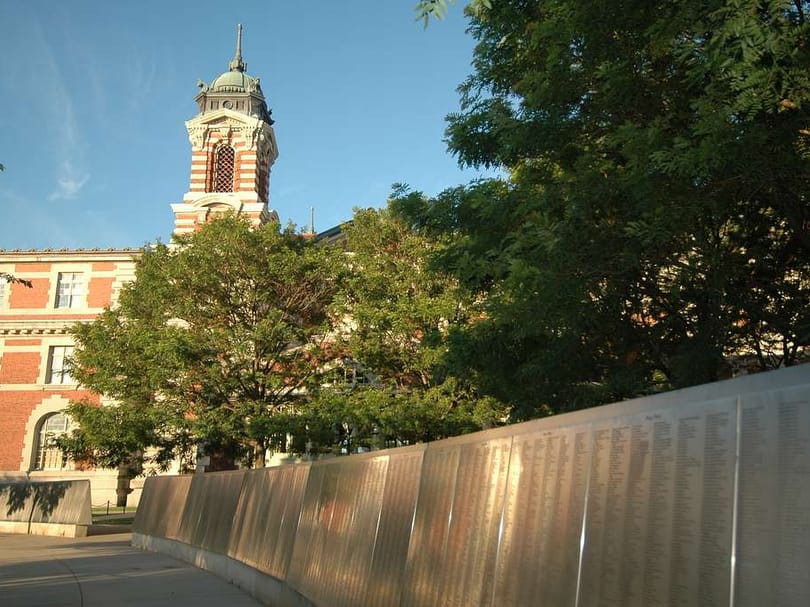
Outside, facing the Manhattan skyline, the American Immigrant Wall of Honor lists hundreds of thousands of names inscribed at the request of their families. It's not a record of everyone who passed through Ellis Island, and it includes immigrants of every era and entry point, so don't be disappointed if your relative isn't on it. Families can still add names, so check with the Foundation if you'd like to honor someone.

Inside, look for the bronze statue of Annie Moore, a teenager from County Cork in Ireland who was the first immigrant processed when the station opened on January 1, 1892.

Ellis Island Wall of Honor
The American Immigrant Wall of Honor on Ellis Island

Your Ellis Island research checklist

  • Ask older relatives for names, spellings, hometowns and arrival years
  • Create a free account on the Statue of Liberty-Ellis Island Foundation database
  • Search original spellings and first names, not just today's version
  • Save or print both pages of your ancestor's manifest
  • Note the ship name, departure port and arrival date
  • Check naturalization papers and censuses to confirm details
  • Bring your notes on the day so you can picture their route through the building
  • Look for your family name on the Wall of Honor

Local tip: Ellis Island and the Statue of Liberty share the same ferry, which departs from Battery Park in Manhattan and Liberty State Park in New Jersey, with airport-style security before boarding. Go early in the day, and give Ellis Island at least two to three hours if you want time for the exhibits as well as your own research. Check current ferry times and any museum closures before you go.

Visit with a guide who knows the stories

On our Statue of Liberty and Ellis Island Tour, a licensed guide handles the logistics and brings the immigrant experience to life, from the ferry to the Registry Room, so you can focus on your family's story. Short on time? Our Statue of Liberty Express Tour is a quicker way to reach the harbor. To follow where many immigrants went next, read our guide to the Lower East Side and New York's immigrant story.

New York Experience is run by ExperienceFirst, a New York tour company founded in 2009.

Ellis Island family history FAQs

Yes. The Statue of Liberty-Ellis Island Foundation's passenger database is free to search. You'll need to register a free account to view full records and manifest images.
Ellis Island operated as a federal immigration station from 1892 to 1954. The busiest years were from around 1900 until the early 1920s, when new laws sharply reduced immigration.
Historians have found little evidence of this. Inspectors worked from ship manifests created at the port of departure. Most immigrants who changed their names did so later, by choice.
From 1855 until 1890, most immigrants to New York were processed at Castle Garden, now Castle Clinton in Battery Park. Records from that period can be searched online too.
The Foundation's Family History Center on the island, where visitors could search passenger records, has been closed while a new records center is developed. Do your main research online before you visit and bring your notes with you.
Only if a family member arranged for it to be inscribed. The Wall of Honor is not a complete list of Ellis Island arrivals, and new names can still be added.