Look down: the broken chains
At the statue's feet lie a broken shackle and chains, and her right heel is raised as if she's striding forward, away from oppression. From the ground they're almost impossible to see, which is why so many visitors never notice them. Look for them in photos taken from above, or in the exhibits in the Statue of Liberty Museum.
She was once a lighthouse
For her first 16 years, the statue was officially a working lighthouse, operated by the U.S. Lighthouse Board. Her torch proved too dim to be much use to ships, and the role ended in 1902.
The torch has been closed for more than a century
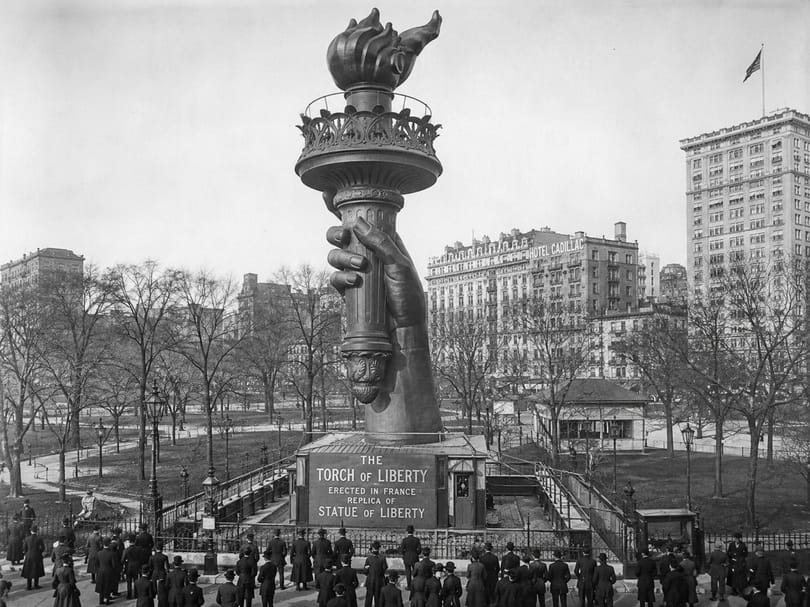
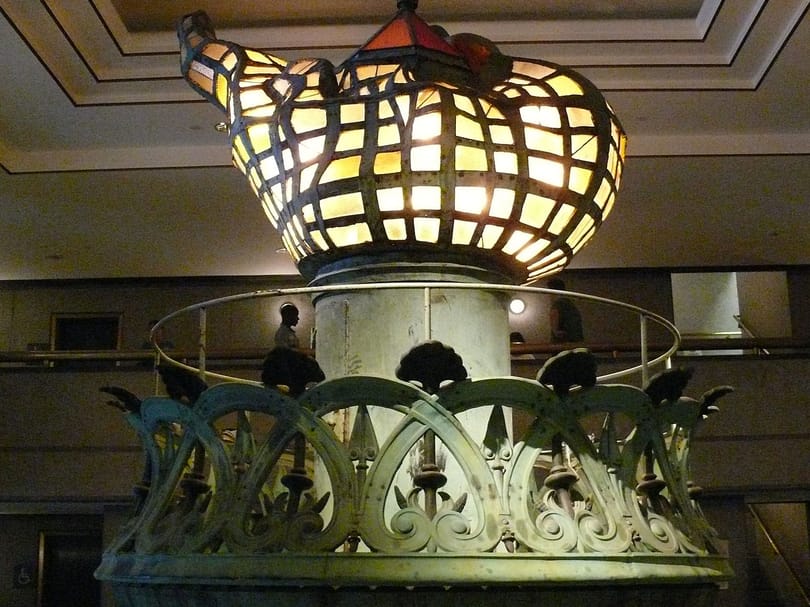
In 1916, saboteurs set off a huge explosion at the Black Tom munitions depot in New Jersey, across the harbor, damaging the statue's arm. The torch balcony has been closed to the public ever since. During the statue's restoration for its centennial in 1986, the original torch was replaced with a new copper flame covered in gold leaf.
A famous poem came later
Emma Lazarus wrote her sonnet "The New Colossus" in 1883 to help raise money for the pedestal. It wasn't until 1903 that a plaque bearing the poem, with its welcome to the world's "huddled masses," was placed inside the pedestal, and its words gradually changed how Americans saw the statue: as a symbol of welcome to immigrants.