All posts

September 23, 2026

The Lower East Side and New York's immigrant story: tenements, delis and the Tenement Museum

Ellis Island was where millions of immigrants entered America. The Lower East Side is where many of them actually lived. For a century, the blocks south of Houston Street and east of the Bowery took in wave after wave of newcomers: Irish and German families, then Jewish immigrants from Eastern Europe, Italians, Chinese, Puerto Ricans, Dominicans and many more. Around 1900, parts of the neighborhood were among the most densely populated places on the planet.

Today, the tenements are home to boutiques, bars and galleries as well as long-time residents. But the old neighborhood hasn't gone anywhere. It's in the buildings, the houses of worship and, most deliciously, the food. Here's how to read the Lower East Side's story as you walk.
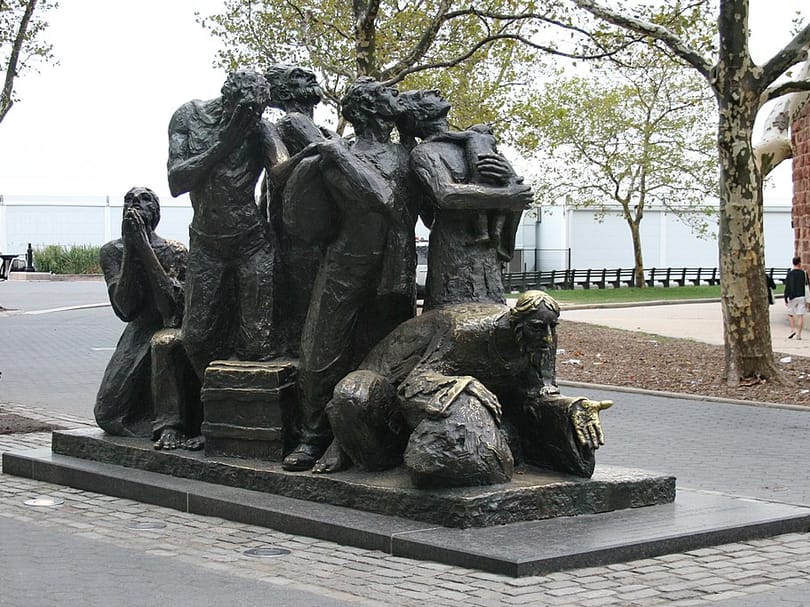
The Immigrants - Battery Park NYC
The Immigrants, a sculpture in Battery Park honoring the millions who arrived through New York

What was a tenement?

In 19th-century New York, a tenement was a multi-family rental building, usually five or six stories tall, built on a narrow city lot about 25 feet wide. Landlords packed in as many apartments as they could. A typical family lived in three small rooms totaling a few hundred square feet, and often took in boarders or did piecework sewing at the kitchen table to make the rent. In many buildings, only the front room had a window to the street, while the interior rooms had little light or fresh air. Toilets were privies in the backyard, shared by everyone.

Reformers fought for change. Photographer and journalist Jacob Riis shocked middle-class readers in 1890 with How the Other Half Lives, documenting conditions in the city's slums. A series of housing laws, in 1867, 1879 and especially 1901, gradually brought in fire escapes, air shafts, windows in every room and, eventually, indoor toilets. Walk down almost any Lower East Side block and you'll see the results: fire escapes zigzagging down brick facades, a feature so familiar now that it's easy to forget they were once a hard-won safety measure.

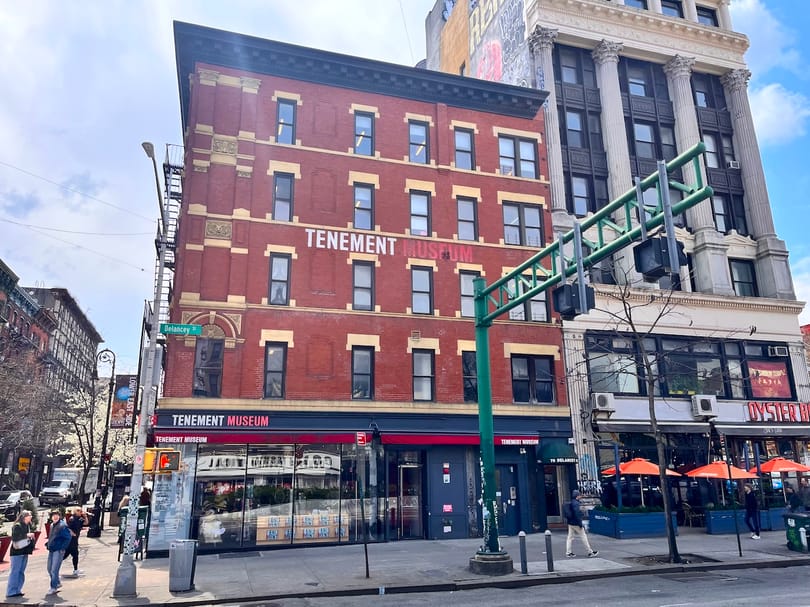
Exterior Entrance of Tenement Museum in NYC
The Tenement Museum's visitor entrance on Orchard Street

The Tenement Museum and 97 Orchard Street

The best way to understand tenement life is to step inside one. The building at 97 Orchard Street went up in 1863, and over the next seven decades thousands of people from more than 20 countries called it home. In 1935, rather than pay for upgrades required by new housing laws, the landlord evicted the residential tenants and sealed the upper floors. They stayed that way, almost untouched, for more than 50 years.

When the founders of the Tenement Museum found the building in the late 1980s, they discovered layers of wallpaper, linoleum and everyday life frozen in place. Today, the museum has restored apartments to tell the stories of real families who lived there, from German and Irish households in the 1860s and 1870s to Jewish and Italian families in the early 20th century. Standing in a kitchen the size of a closet, hearing how a family of six made it work, is unforgettable.

Know before you go: The apartments can only be seen on guided tours with timed tickets, and group sizes are small, so tours often sell out, especially on weekends. Book ahead, check which stories each tour covers and look for neighborhood walking tours if you'd like to explore the streets as well. Some historic spaces involve narrow stairs, so check accessibility details in advance.

Synagogues, settlements and newspapers

By the early 20th century, the Lower East Side was home to hundreds of thousands of Jewish immigrants from Eastern Europe, and dozens of synagogues, large and small, filled its streets. The grandest survivor is the Eldridge Street Synagogue, completed in 1887 as one of the first great synagogues in the country built by Eastern European Jews. As its congregation moved away, the main sanctuary fell into disrepair for decades, until a long restoration brought it back to life. Its east window, designed by artist Kiki Smith, glows with golden stars. The building now houses the Museum at Eldridge Street, and it's still an active synagogue.

On East Broadway, the tall building that once housed the Jewish Daily Forward, the Yiddish newspaper that was essential reading for immigrants, still stands. And on Henry Street, the Henry Street Settlement, founded by nurse Lillian Wald in 1893, pioneered public health nursing and social services for the neighborhood. It's still serving the community today.

A neighborhood of many layers

The Lower East Side has never belonged to one group. Italian immigrants settled just to the west, around Mulberry Street, and Chinatown grew south and east. After World War II, Puerto Rican New Yorkers made the area around Avenues A through D their own and gave it a new name, Loísaida. Dominican, Chinese and other communities followed. Every layer left something behind.

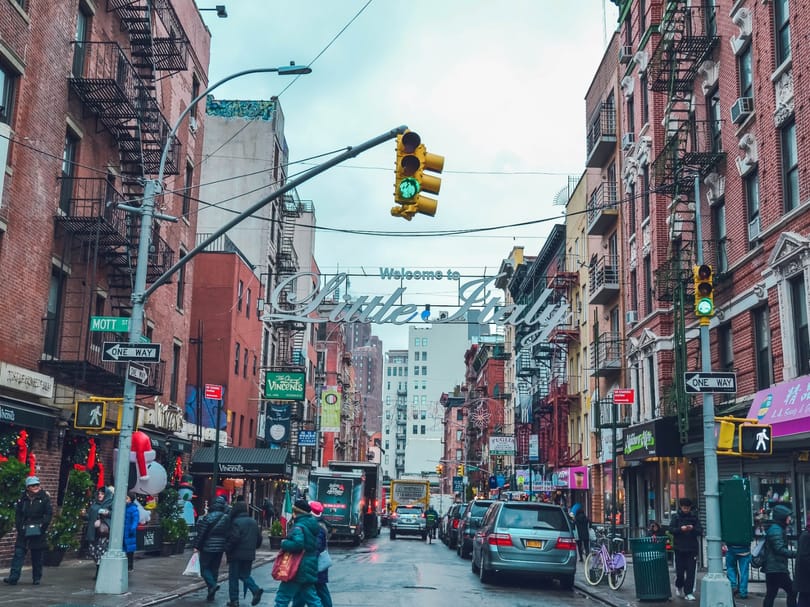
Little Italy in lower Manhattan
Little Italy, the Lower East Side's neighbor to the west
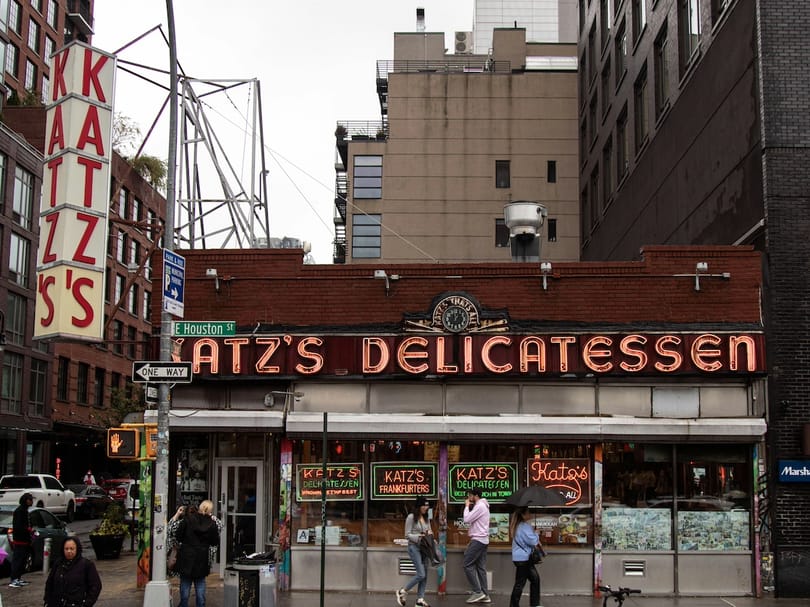
Katz Deli NYC
Katz's Delicatessen on East Houston Street

Eat your way through the story

The immigrant Lower East Side survives most vividly in its food, and a few old-timers are true institutions.

  • Katz's Delicatessen, at Houston and Ludlow Streets since the late 1800s, is famous for towering hand-carved pastrami sandwiches. You'll get a paper ticket at the door. Don't lose it: it's how your order is tracked. During World War II, the deli encouraged families to "send a salami to your boy in the army," and a sign hangs over the table where a famous scene in When Harry Met Sally was filmed.
  • Russ & Daughters on East Houston Street has sold smoked fish, caviar and bagel toppings since the early 1900s. It's an "appetizing" store: in Jewish food tradition, delis sold meat, while appetizing shops sold fish and dairy, as kosher law keeps the two apart.
  • Yonah Schimmel Knish Bakery, also on Houston, has been baking round, hearty knishes for more than a century.
  • Economy Candy on Rivington Street is a floor-to-ceiling candy shop that has been in business since 1937.

From pushcarts to Essex Market

A century ago, Orchard, Hester and Essex Streets were lined with pushcarts selling everything from herring to hats, and the noise and congestion were legendary. In 1940, Mayor Fiorello La Guardia moved many vendors indoors to a new city market on Essex Street. The Essex Market is still going strong, since 2019 in a modern building across Delancey Street, with stalls selling produce, cheese, spices and food from around the world. It's a great place to graze and to see how the neighborhood's mix of cultures continues today.

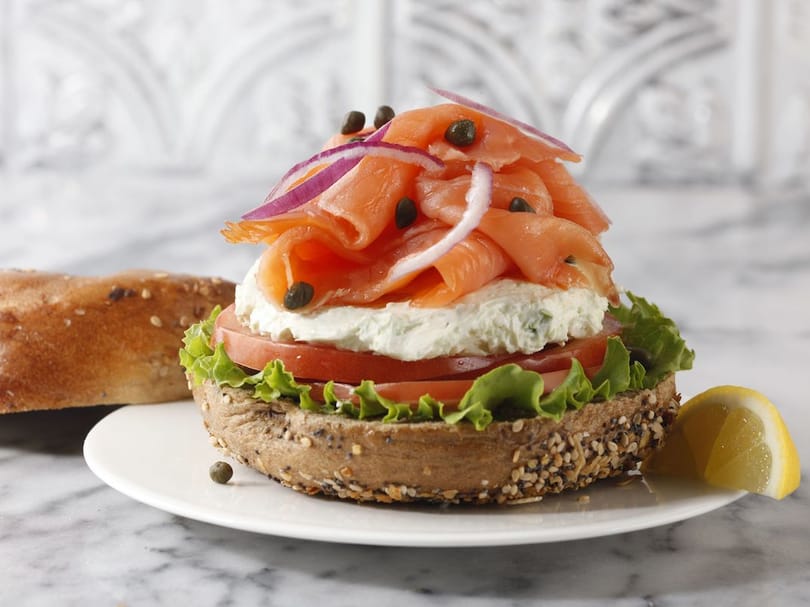
bagel from Ess-A-Bagel in New York City
The New York bagel, brought to the city by Eastern European Jewish immigrants

Lower East Side must-dos

  • Book a guided tour of 97 Orchard Street at the Tenement Museum
  • Count the fire escapes on a tenement block
  • Step inside the Eldridge Street Synagogue and see its star-filled window
  • Find the old Jewish Daily Forward building on East Broadway
  • Order pastrami at Katz's, and hold on to your ticket
  • Pick up smoked fish and a bagel at Russ & Daughters
  • Try a knish at Yonah Schimmel
  • Graze your way through Essex Market

Keep following the immigrant trail

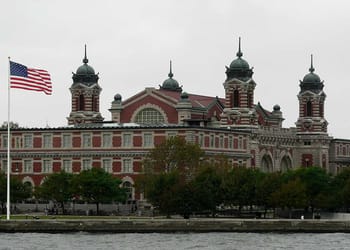
The Lower East Side sits right next to some of Manhattan's other great immigrant neighborhoods. Our SoHo, Little Italy and Chinatown Walking Tour explores the streets just to the west, and our block-by-block food guide tells you where to eat. To see where so many of these families first arrived, join our Statue of Liberty and Ellis Island Tour, and read our guide to tracing your family at Ellis Island.

New York Experience is run by ExperienceFirst, a New York tour company founded in 2009.

Lower East Side FAQs

Yes, it's strongly recommended. The historic apartments can only be visited on guided tours with timed tickets, and small group sizes mean tours often sell out.
Allow half a day: one to two hours for a Tenement Museum tour, plus time to walk the neighborhood, visit the Eldridge Street Synagogue and stop for food.
In Jewish food tradition, a deli sells cured and cooked meats such as pastrami and corned beef, while an appetizing store sells fish and dairy, such as smoked salmon and cream cheese, because kosher law keeps meat and dairy separate.
It was the first American home for huge numbers of immigrants, especially Eastern European Jews, Italians, Irish and Germans in the 19th and early 20th centuries, and later Puerto Rican, Chinese and Dominican New Yorkers.
Take the F train to Delancey Street or East Broadway, the J, M or Z train to Essex Street, or the F train to Second Avenue on Houston Street.