All posts

September 23, 2026

Grand Central Terminal secrets: the whispering gallery, the backwards ceiling and the hidden tracks

Every weekday, a river of commuters pours through Grand Central Terminal without looking up. They're missing one of the great buildings of America. Opened in 1913, the terminal is a Beaux-Arts palace built for trains, full of hidden staircases, coded symbols and engineering ideas that reshaped Midtown Manhattan.

You don't need a ticket to explore it. Here are the secrets worth hunting down, from a corner where you can whisper across a room to a ceiling where the stars run the wrong way.

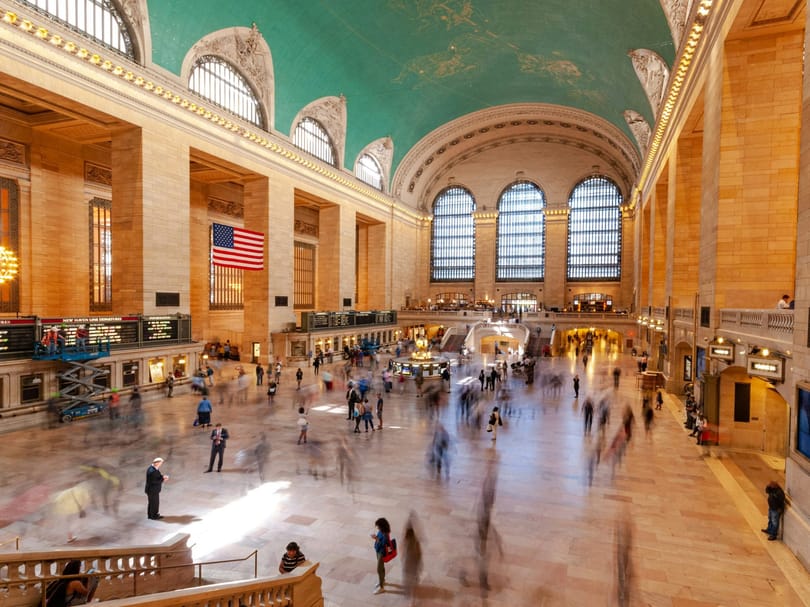
The Main Concourse at Grand Central Terminal
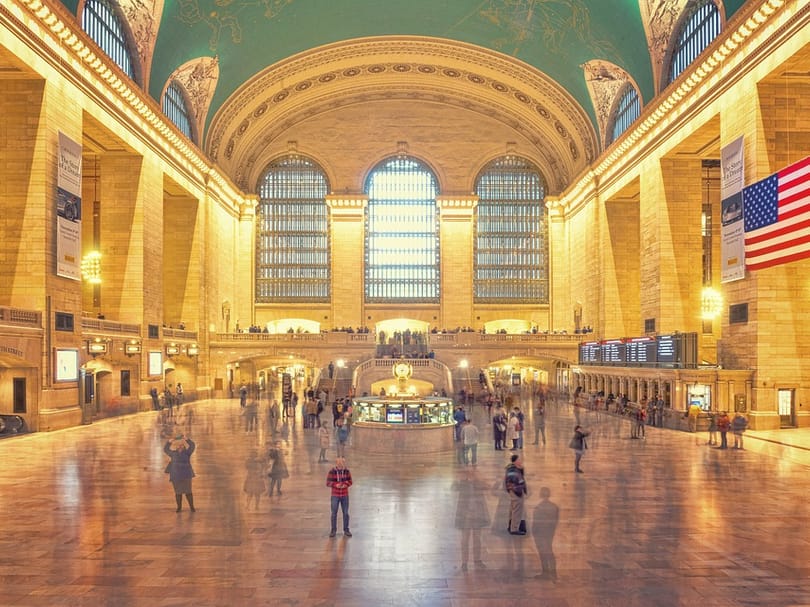
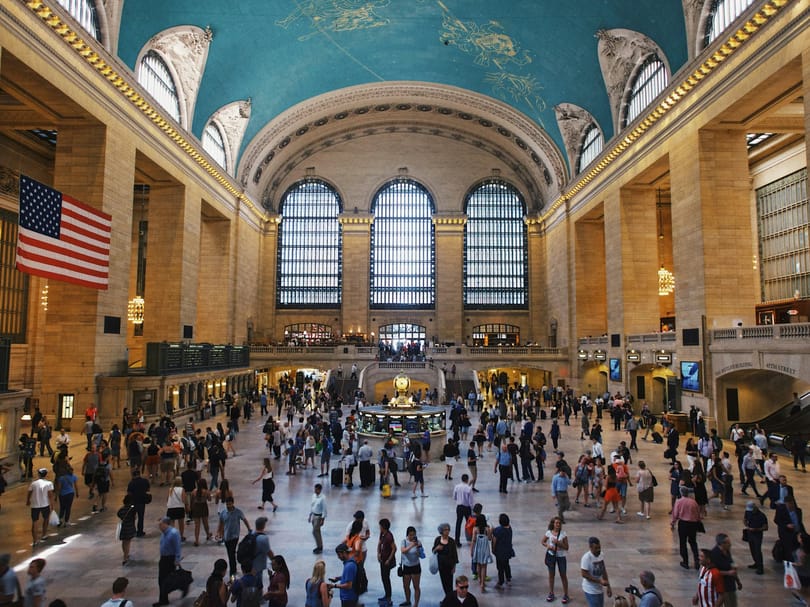
The Main Concourse, with its celestial ceiling and famous clock

A station built by a disaster

The first Grand Central, opened in 1871 by railroad baron Cornelius Vanderbilt, was a busy depot where steam locomotives puffed smoke into the tunnels beneath Park Avenue. In 1902, in that smoky tunnel, two trains collided and more than a dozen people died. Public outrage led to a ban on steam trains in Manhattan, and the railroad's chief engineer, William J. Wilgus, saw an opportunity.

His plan was bold. Electric trains could run underground, so the tracks could be buried on two levels and covered over. That freed up the land above to be sold or leased for development, and the money helped pay for the new terminal. The streets we now know as upper Park Avenue, lined with hotels and office towers, grew on top of the rail yards. The current building, designed by the firms Reed and Stem and Warren and Wetmore, opened on February 2, 1913, and it still has more platforms than any other train station in the world.

Busy Grand Central Station, New York
Look up from the concourse to find the zodiac overhead

The backwards ceiling

High above the Main Concourse, a turquoise sky filled with gold constellations stretches across the vaulted ceiling. It was designed by the French artist Paul César Helleu, and it has a famous flaw: much of the sky is painted in reverse, as if seen from outside the heavens looking in, rather than from Earth looking up.

Nobody is completely sure why. The explanation usually given is that Helleu based his design on a medieval manuscript that showed the heavens as seen from outside the celestial sphere, though many people suspect it was simply flipped by mistake. The Vanderbilts' answer, once the error was spotted, was that it showed the sky from God's point of view, which is either an elegant answer or an excellent piece of damage control.

The dark patch that tells a story

By the 1990s the ceiling was so dark that most people had forgotten it was blue. During the restoration completed in 1998, conservators discovered that the grime was mostly tar and nicotine from decades of cigarette smoke. They cleaned everything except one small dark rectangle, near the constellation Cancer in the northwest corner, left deliberately to show how filthy it had become. Once you know it's there, you can't stop seeing it.

The whispering gallery

Head down the ramps toward the Dining Concourse and you'll find a low, vaulted archway just outside the Grand Central Oyster Bar, lined with beautiful herringbone-patterned Guastavino tiles. Stand in one corner facing the wall, and have a friend stand in the diagonally opposite corner. Whisper, and they'll hear you clearly, even over the noise of the crowd passing between you. The curved ceiling carries the sound around the arch.

People have been proposing here for generations. The Oyster Bar itself has been serving since the terminal opened in 1913, and its tiled vaulted ceilings are worth a look even if you don't stay for a meal.

Local tip: Face right into the corner, with your mouth close to the tiles, and speak softly. It works best when the arch isn't packed, so try mid-morning or mid-afternoon on a weekday, away from the evening rush.

People walking inside Grand Central Terminal New York
Travelers crossing the Main Concourse

The clock, the acorns and the hidden staircase

"Meet me under the clock" has been a New York instruction for over a century. The four-faced clock on top of the information booth in the center of the Main Concourse has faces of milky opal glass. You'll often hear that they're made of precious opal and worth millions, but that's a myth: opal glass contains no gemstone at all. The booth hides its own secret: inside is a spiral staircase that leads down to a second information booth on the lower level.

As you wander, look for acorns and oak leaves carved into stone, cast into metal and even worked into the light fixtures. They're the emblem of the Vanderbilt family, a nod to the saying that a mighty oak grows from a small acorn.

Outside on 42nd Street, the facade is crowned by a monumental sculpture group of Mercury flanked by Hercules and Minerva, wrapped around a great clock made with Tiffany glass.

The hidden tracks

Track 61

Deep beneath the Waldorf Astoria hotel, a few blocks north of the terminal, lies a little-known platform often called Track 61. It was built as part of the rail yard, not as a public platform, and it has a freight elevator large enough to carry a car up toward the hotel. A long-told story holds that President Franklin D. Roosevelt used it to arrive at the Waldorf discreetly, keeping the effects of his polio out of public view. Only one such visit, during a campaign stop in October 1944, is firmly documented, but the platform is real. The old rail car parked nearby is often called FDR's, though it's actually an ordinary baggage car.

M42

Somewhere far below the terminal is a basement room known as M42, which once housed the rotary converters that turned AC power into DC for the trains. It was so important to the railroad, and later to the war effort, that its exact location is famously left off maps and blueprints. It's closed to visitors, but it's a favorite piece of Grand Central lore.

A hole in the heavens

Look closely at the ceiling near the constellation Pisces and you may spot a small round hole. It's a remnant of 1957, when a U.S. Army Redstone rocket was displayed upright in the concourse during the early Space Race, and a cable anchored through the ceiling was needed to steady it.
The building that almost disappeared

In 1963, the original Pennsylvania Station, a magnificent classical terminal on the West Side, was demolished. The loss shocked New Yorkers and helped create the city's Landmarks Preservation Commission. A few years later, Grand Central's owners proposed building an office tower on top of the terminal. The city refused under its new landmarks law, and the fight went all the way to the U.S. Supreme Court, which upheld the city's decision in 1978. Jacqueline Kennedy Onassis was among the high-profile New Yorkers who campaigned to save it. Without that battle, the concourse you're standing in might not exist.

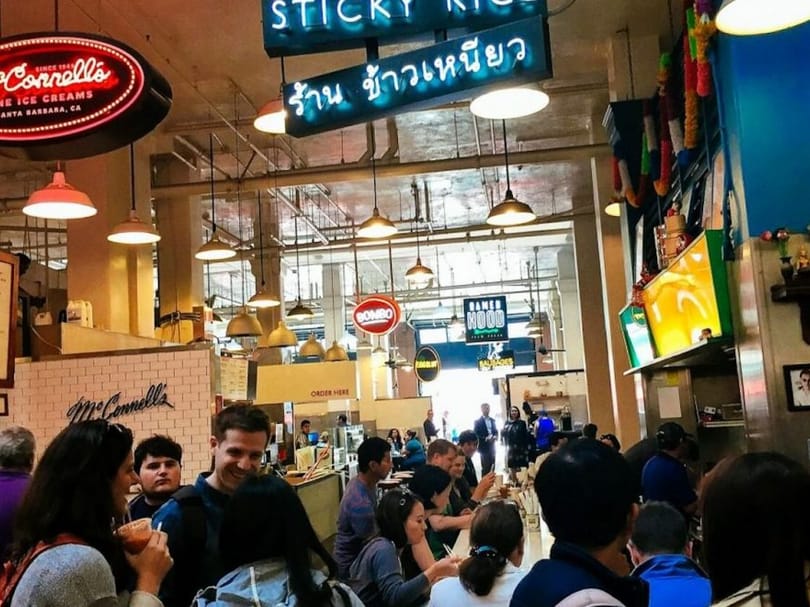
Grand Central Market
Grand Central Market, a good stop for picnic supplies

Grand Central secrets to find

  • Find the backwards constellations on the Main Concourse ceiling
  • Spot the dark patch near Cancer left after the restoration
  • Look for the small hole near Pisces
  • Whisper across the arch outside the Oyster Bar
  • Meet a friend under the four-faced clock
  • Count the Vanderbilt acorns and oak leaves
  • Admire the sculpture and Tiffany glass clock on the 42nd Street facade
  • Grab a snack in Grand Central Market

Explore Midtown with a guide

Grand Central is the perfect starting point for exploring Midtown's architecture. Our Skyscrapers and Summit Guided Experience links the terminal with the Chrysler Building and the towers around it, then heads up to SUMMIT One Vanderbilt right next door. For a private walk shaped around your group, try our Private Midtown Walking Tour with the Empire State Building. And to go deeper into the skyline story, read how New York invented the skyscraper skyline.

New York Experience is run by ExperienceFirst, a New York tour company founded in 2009.

Grand Central Terminal FAQs

Yes. The terminal is a working public space, so you can walk in and explore the Main Concourse, the Dining Concourse and the whispering gallery for free during opening hours.
It's on the Dining Concourse level, in the tiled archway just outside the Grand Central Oyster Bar. Stand in diagonally opposite corners and whisper toward the wall.
Much of the zodiac is painted in reverse, as if seen from outside the sky. The usual explanation is that the design was based on a medieval manuscript that showed the heavens from outside, though it may simply have been flipped by mistake. The Vanderbilts explained it as the sky seen from God's point of view.
No. Track 61 is a non-public platform beneath the Waldorf Astoria area and is not open to visitors.
Grand Central Terminal is the historic train terminal. Grand Central Station is technically the name of the post office next door and of the subway station beneath it, though most people use the names interchangeably.
The current Grand Central Terminal opened on February 2, 1913.