All posts

September 23, 2026

Harlem's great stories: the Harlem Renaissance, the Apollo and where to eat and listen today

Take the A train uptown and you arrive somewhere that has shaped American culture out of all proportion to its size. In the 1920s, Harlem was home to the writers who redefined American literature, the musicians who invented new kinds of jazz and the thinkers who argued for civil rights long before the movement had a name. The neighborhood has changed enormously since then, but its churches, theaters, brownstone streets and supper clubs still carry those stories.

Here's a guide to Harlem's great chapters and the places where you can still feel them today, plus where to eat and where to hear live music when the sun goes down.
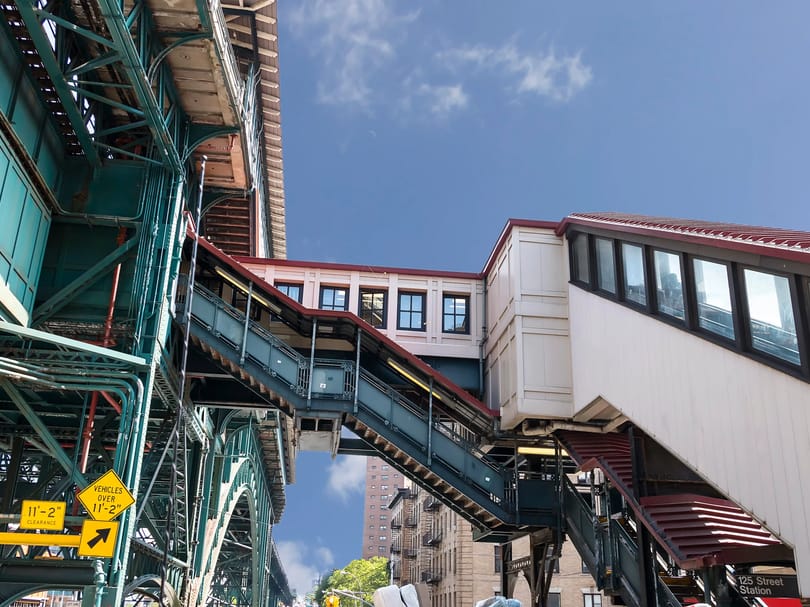
The stairs up to the elevated 125th Street subway station

How Harlem became Black Harlem

Harlem began as a Dutch farming village, Nieuw Haarlem, founded in the 1650s. It stayed rural for two centuries, until elevated railways reached upper Manhattan in the late 1800s and developers raced to build elegant rowhouses and apartment buildings for the white middle class they expected to follow. Too many were built too fast. When the real estate market collapsed in the early 1900s, many buildings stood empty.

Philip A. Payton Jr., an African American real estate entrepreneur, saw the opportunity and began renting apartments to Black families, who had been squeezed into crowded, overpriced districts farther downtown. Within a few years, the Great Migration was bringing hundreds of thousands of Black Americans out of the South to Northern cities, while immigrants arrived from the Caribbean. By the 1920s Harlem was the largest and most vibrant Black community in the country.

The Harlem Renaissance

What followed was an explosion of creativity. Writers and artists called it the "New Negro" movement, after the 1925 anthology The New Negro edited by philosopher Alain Locke. Later generations called it the Harlem Renaissance.

  • Langston Hughes wrote poems that set the rhythms of jazz and blues on the page. His brownstone at 20 East 127th Street, where he lived for the last two decades of his life, still stands.
  • Zora Neale Hurston arrived in the 1920s and went on to write Their Eyes Were Watching God.
  • Claude McKay, Countee Cullen and Jessie Redmon Fauset published poetry and novels, while Fauset also helped discover new talent as literary editor of The Crisis, the NAACP magazine edited by W.E.B. Du Bois.
  • Aaron Douglas developed a bold, modernist visual style, and his murals for the 135th Street branch of the New York Public Library are among the movement's masterpieces.

Much of the conversation happened in living rooms. Heiress A'Lelia Walker, daughter of the self-made millionaire Madam C.J. Walker, hosted a famous salon she called the Dark Tower, while "rent parties," where tenants charged admission to cover the rent, gave stride pianists like Fats Waller and James P. Johnson somewhere to play.

Don't miss: the Schomburg Center

Arturo Alfonso Schomburg, a Puerto Rican-born scholar of African descent, spent his life collecting books, manuscripts and art documenting the history of people of African descent. The New York Public Library acquired his collection in 1926, and today the Schomburg Center for Research in Black Culture on Malcolm X Boulevard at 135th Street is one of the world's great research libraries on the subject, with changing exhibitions open to visitors. In its lobby, look down: Langston Hughes's ashes are interred beneath a floor artwork named "Rivers," after his poem "The Negro Speaks of Rivers." Check current hours before you visit.

The Apollo Theater in Harlem
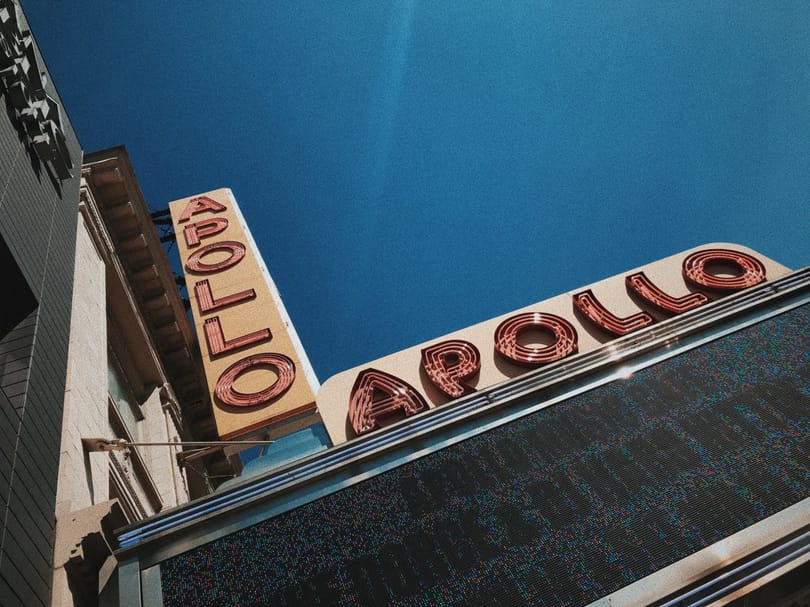
The Apollo Theater on West 125th Street

The Apollo: where stars were born

No building says Harlem quite like the Apollo Theater on West 125th Street. It opened in 1914 as a burlesque house that barred Black audiences. In 1934, under new management, it reopened as the Apollo, welcoming Black performers and audiences, and it quickly became the most important stage in Black entertainment.

Its most famous tradition, Amateur Night, began that same era. At one of the early contests, in November 1934, a nervous 17-year-old named Ella Fitzgerald, who had planned to dance, switched to singing at the last minute and won. Over the decades, the Apollo stage launched or boosted the careers of an astonishing list of artists, and James Brown's 1962 concert there became one of the most celebrated live albums ever released.

Amateur Night audiences are famously honest: they cheer the performers they love and boo the ones they don't. Before going on, contestants rub the "Tree of Hope," a section of a tree trunk that once stood outside a nearby theater and was believed to bring luck. Amateur Night still runs, so check the Apollo's schedule and book ahead.

From the Cotton Club to bebop

Harlem's nightlife in the Prohibition era was legendary, and complicated. The Cotton Club, where Duke Ellington's orchestra held a long residency from 1927 and Cab Calloway later led the band, featured Black performers but admitted white audiences only. A few blocks away, the Savoy Ballroom, which opened in 1926 on Lenox Avenue, welcomed dancers of all backgrounds and became the home of the Lindy Hop. Its house bands, including drummer Chick Webb's orchestra with a young Ella Fitzgerald, battled visiting bands in front of packed dance floors.

In the early 1940s, the after-hours jam sessions at Minton's Playhouse on West 118th Street helped give birth to bebop, as Thelonious Monk, Dizzy Gillespie, Charlie Parker and drummer Kenny Clarke pushed jazz into faster, more complex territory. And in 1939, Billy Strayhorn wrote "Take the A Train" for Ellington's band, a tune inspired by the subway directions to Sugar Hill, Harlem's most prestigious address.

Streets worth walking

  • Strivers' Row. On West 138th and 139th Streets, between Adam Clayton Powell Jr. and Frederick Douglass Boulevards, stand some of the finest rowhouses in the city, designed in the early 1890s by several leading architects, including the firm of McKim, Mead and White. They became home to many of Harlem's most successful Black professionals, hence the nickname. Look for the old signs on the rear alley gates telling riders to walk their horses.
  • Sugar Hill. Farther north and uphill, the apartment building at 409 Edgecombe Avenue was home at various times to W.E.B. Du Bois and Thurgood Marshall.
  • Abyssinian Baptist Church. One of the oldest Black Baptist congregations in the country, led for decades by Adam Clayton Powell Sr. and then his son, the congressman Adam Clayton Powell Jr. Many Harlem churches welcome respectful visitors to Sunday services, but policies vary, so check ahead, dress modestly and remember it's a place of worship first.
  • Marcus Garvey Park. Climb to the top to see a cast-iron fire watchtower from the 1850s, the last of its kind in the city.

Where to eat and listen today

Harlem's food scene mixes Southern soul food, Caribbean and West African cooking and newer restaurants from celebrated chefs. A few long-standing favorites:

  • Sylvia's on Malcolm X Boulevard (Lenox Avenue), opened by Sylvia Woods in 1962, is the name most people know. Come hungry for fried chicken, smothered pork chops and candied yams.
  • Red Rooster, chef Marcus Samuelsson's restaurant nearby, puts a modern spin on Harlem comfort food and often has live music.
  • Amy Ruth's, just off Malcolm X Boulevard, is known for its chicken and waffles.
  • Along West 116th Street, you'll find Senegalese and other West African restaurants serving rich stews and grilled fish.

For music, look for small jazz rooms and supper clubs that keep Harlem's tradition alive. Minton's itself has closed and reopened several times over the years, so check whether it's open and hosting live sets during your visit. The National Jazz Museum in Harlem is a good place to learn about the history first. Menus, schedules and even venues change, so check what's on before you go.

Local tip: Harlem is easy to reach. The 2 and 3 trains run up Malcolm X Boulevard, and the A, B, C and D trains stop at 125th Street near the Apollo. Plan a weekday afternoon for the Schomburg Center and Strivers' Row, then stay for dinner and a set of live music.

Harlem stories to seek out

  • Stand outside the Apollo and walk its sidewalk plaques
  • Find Langston Hughes's "Rivers" at the Schomburg Center
  • Walk Strivers' Row and spot a "walk your horses" sign
  • See the Langston Hughes House on East 127th Street
  • Climb to the watchtower in Marcus Garvey Park
  • Eat soul food on Malcolm X Boulevard
  • Hear a live jazz set uptown
  • Hum "Take the A Train" on the way home

See uptown on your own terms

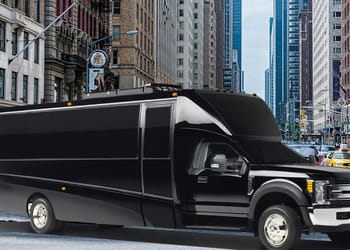
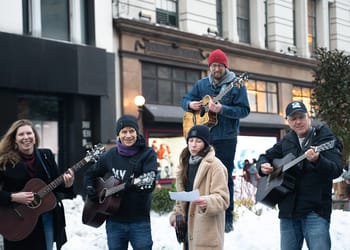
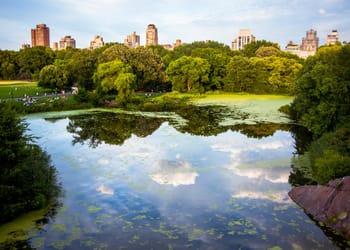
Want to include Harlem in a wider day of sightseeing? Our Manhattan by Private Luxury Car and Private Luxury Tour of NYC With Transportation give your group a dedicated guide and vehicle, so it's worth asking about the neighborhoods you'd most like to see. Music lovers should also look at Rock 'n' Roll on the Streets, our private NYC music experience. And since the northern end of Central Park borders Harlem, pair your visit with our guide to Central Park's hidden history.

New York Experience is run by ExperienceFirst, a New York tour company founded in 2009.

Harlem FAQs

The Harlem Renaissance was a flowering of Black literature, art, music and ideas centered in Harlem in the 1920s and 1930s, associated with figures such as Langston Hughes, Zora Neale Hurston, Aaron Douglas and Duke Ellington.
Yes. The Apollo still hosts concerts, comedy and its famous Amateur Night. Check the theater's current schedule and book tickets in advance.
Amateur Night began in the Apollo's early years in the mid-1930s. Ella Fitzgerald won one of the first contests in 1934.
Harlem is a lively residential neighborhood that welcomes many visitors every day. Use the same everyday awareness you would anywhere in New York City, especially late at night.
Many Harlem churches welcome respectful visitors, but policies differ and some limit tourist groups. Check with the church in advance, arrive early, dress modestly and follow any guidance on photography.
Take the A, B, C or D train to 125th Street, or the 2 or 3 train up Malcolm X Boulevard. The ride from Midtown takes around 15 to 20 minutes.